Jen Ash Calls Out a System That Still Silences Women
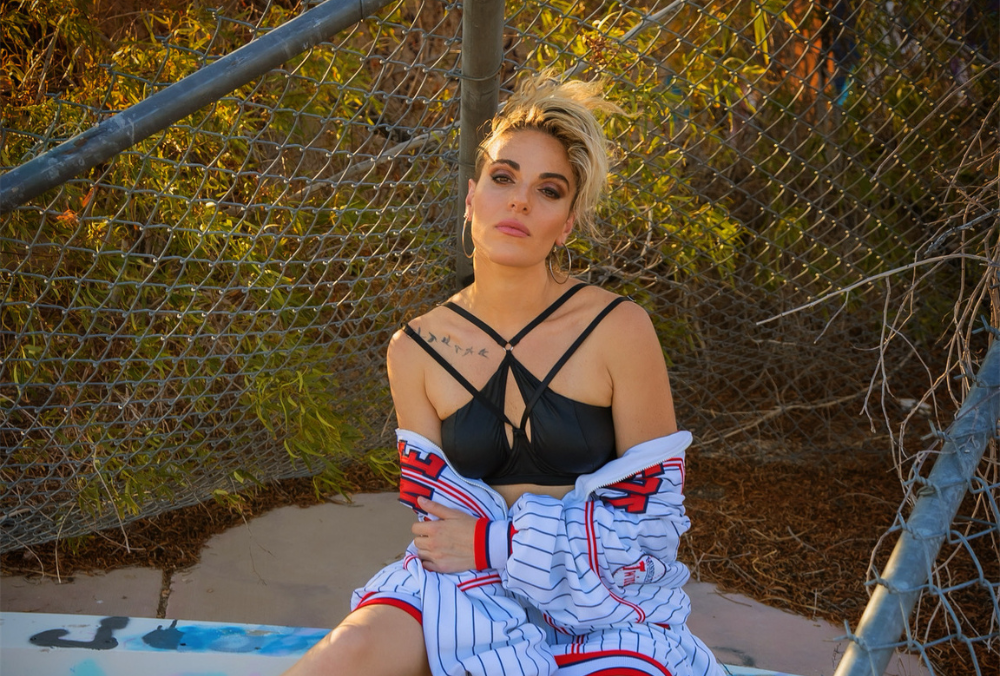
Jen Ash doesn’t write songs to fill space on a playlist. She writes them because something needs to be said — and she has decided she’s the one to say it.
The singer-songwriter, born in Lebanon and raised in France, spent 14 years as a professional basketball player before walking away from the court in 2018 to pursue music on her own terms. That background — disciplined, competitive, built on years of self-reinvention — shows up in how she constructs a narrative. Her recent single “Woman” confronts the societal pressure placed on women around motherhood and identity, a subject she approaches not as commentary from a distance, but as someone who has lived inside those expectations. On Instagram, she put it plainly: “You decide not to have kids, suddenly everyone has an opinion… makes you feel guilty, ashamed and pressured by the expectations of society.”
That directness carries into her upcoming single, “Freedom,” which shifts the lens towards forced marriage and the abuse of women — issues she describes as deeply enraging, and too often met with silence. For Jen Ash, the silence is precisely the problem. The song is framed as an act of solidarity with women who remain unheard, held back by fear and shame in systems that continue to permit — and in some cases legally sanction — the oppression of women and girls.
What makes Ash’s approach distinct, however, is not just the subject matter. It’s the musical lineage she draws from to carry it. She cites the golden era of Chanson Française — artists like Lara Fabian, Jean-Jacques Goldman, and Patrick Bruel — as formative influences on her understanding of songwriting as emotional architecture. The tradition, rooted in truth and storytelling, informed her sensibility long before she ever stepped into a studio. Alongside that, her sound fuses Afrobeat rhythms with R&B and the cultural weight of both Lebanese and French identity — a blend that gives her catalog a texture most contemporary pop doesn’t reach for.
She is also planning stripped-back versions of select tracks, a direction she says sometimes resonates more deeply than the original productions. That instinct towards rawness aligns with a broader artistic philosophy: no persona, no constructed image — just the work and what it’s actually trying to say.
With “Freedom” on the horizon, Jen Ash is building something with a throughline. Whether the subject is autonomy, identity, or injustice, the through-line holds: she is not here to be palatable. She is here to be heard.