Laura Nyro’s New York Tendaberry: A Masterpiece of Solitude
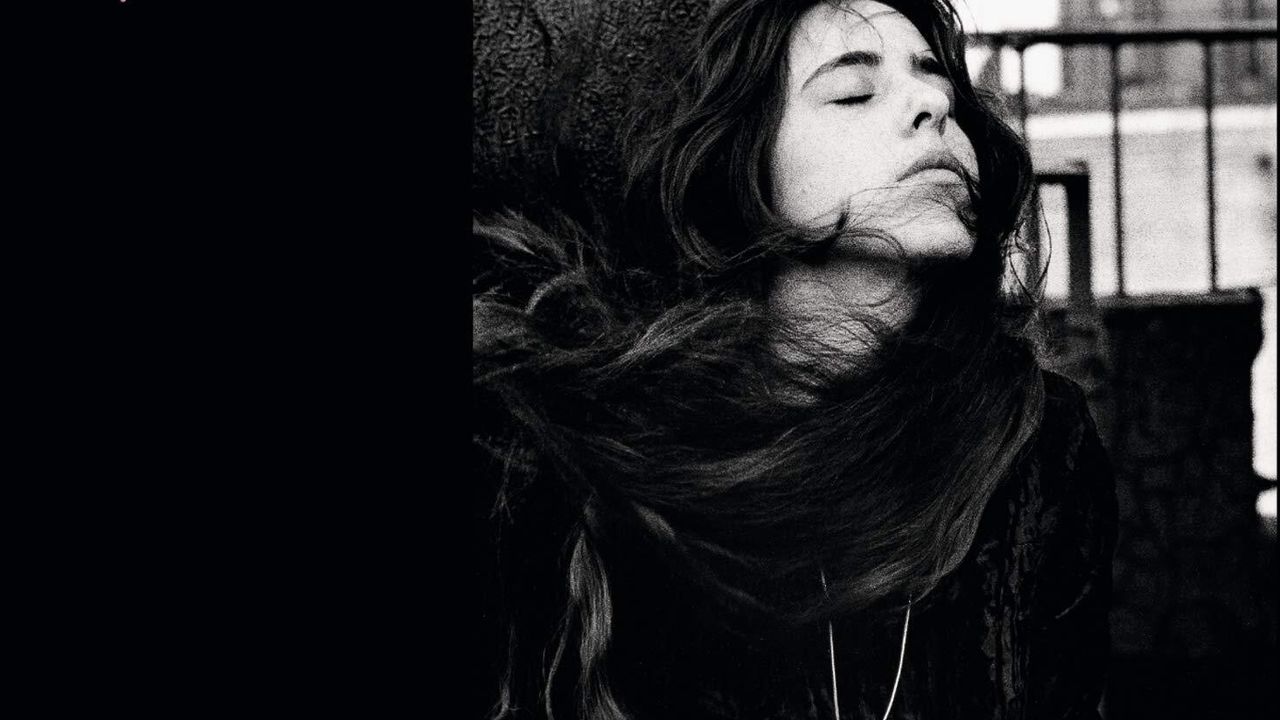
The first album was for the industry: More Than a New Discovery was the songbook that introduced Laura Nyro as a writer so original and suited for pop radio in the late 1960s that, for a wide array of artists, covering her songs all but guaranteed them a hit record. The second album was the masterpiece: Eli and the Thirteenth Confession was a dazzlingly prodigious statement that upgraded the then-20-year-artist from a behind-the-scenes hitmaker into a pop auteur. The packaging was unique for the time—cover art with no text, liner notes proudly displaying all the lyrics and thus welcoming comparisons to Sgt. Pepper’s—and the music overflowed with vision, meaning, and symphonic drama.
The third album was just for herself. New York Tendaberry, released in the fall of 1969, mostly consists of Nyro alone at the piano, delivering songs that eschewed and subverted most of the characteristics that had won her attention and adoration throughout the preceding decade. Unlike her first album, the compositions rarely built toward pop choruses or easy, identifiable emotion. And unlike her second album, this music didn’t aim to overwhelm. To some of her collaborators, the songs didn’t even sound finished—just some loose fragments she seemed to be making up on the spot.
A Self-Contained World
Despite its critical acclaim, enormous influence, and singular legacy within singer-songwriter music, I’m not sure anyone can ever fully understand New York Tendaberry besides Nyro. Self-produced alongside her engineer Roy Halee, it sounds at times like an avant-garde one-woman show; at others, like an old-school girl group communing with a Ouija board; occasionally, it’s Christmas Mass in an abandoned tenement building. The average song length is around four minutes, and each one covers so much ground, changes direction so suddenly, and welcomes so many lyrical interpretations, that each of them can feel like the centerpiece, the moment where the central action takes place.
Death and the devil dominate the writing, and Nyro would later attribute this darkness to a fascination from her precocious young adulthood. “I think my earlier work, a lot of it, is very intense, and it’s almost seeking to understand the sorrow,” she said the following decade. The word “understand” is important here, in that Nyro isn’t simply describing or expressing sorrow but offering a circuitous path toward the feeling itself. It’s what allows a song like “Tom Cat Goodbye”—which one could interpret as a rush of conflicting emotions after learning your partner has been unfaithful—to shift dramatically between its haunted, spacious verses, a cartoonishly murderous response to “Frankie and Johnny” in the chorus, and a closing refrain that ends with a bone-chilling scream, one of several on the record.
The Painterly Production
The material invites total immersion. Nyro had already flirted with the idea of including perfumes in her record packaging to help transport listeners, and she preferred instructing her accompanists in painterly, abstract directions instead of sheet music so that they could provide the right feeling, not just the notes. The production shows the effects of this process. Jimmy Haskell’s string arrangements come and go like summer storms; in “Mercy on Broadway,” a gunshot blasts in the background to no particular response. Even Nyro’s piano playing seems to shift in and out of focus, drawing our attention to the pregnant pause of a note fading in a quiet room.
The closest thing to a traditional Nyro song was “Time and Love,” although even that one takes efforts to place the surrounding tales of love and loss and junkies and traitors on a larger, spiritual timeline. In the verses, each sentence is prefaced with an introductory “so,” as if presenting the evidence to help reach a conclusion: “So Jesus was an angel and mankind broke his wing,” begins the final verse. “Nothing cures like time and love,” she offers in the chorus, a line that other artists might use to cushion the blows of heartache but Nyro instead positions as the teaching of a kind of Newer Testament, framing her stories as both ancient and distinctly of her time.
A Legacy of Originality
It was wise of Columbia to issue “Save the Country” as a single prior to her completion of the album, shortly after she wrote it in response to the assassination of Robert F. Kennedy. Condensed to a two-minute runtime, it can be heard as a very 1968 assessment of the cultural landscape, a state-of-the-union that was played hourly on Los Angeles radio, had all the lyrics printed as a full-page ad in the press, and would receive marketable covers from the Fifth Dimension and Paul Revere & the Raiders. But with its extended outro on New York Tendaberry, the song takes on a more complicated meaning. As its chorus is repeated, increasingly frantic and ragged, she seems to embody the exhaustion of the political moment, questioning whether her transmissions could make a difference in such a loud, violent world. Who is she praying to? Who is listening?
Nyro brought several innovations to pop music, and one was her blending of message and medium: quoting other songwriters, interpolating folk standards and gospel hymns, swerving between genre and tone like a restless hand at the radio dial, all in an effort to elevate her chosen medium to something that felt eternal. There’s a reason why her fans included songwriting visionaries like Bob Dylan and Joni Mitchell alongside jazz luminaries like Miles Davis and Alice Coltrane; why Barbra Streisand could record three cover songs on one album and Bette Midler could give her one of the Rock Hall’s most personal, emotionally charged induction speeches: “In a world full of imitators—fake it ’til you make it—she was a complete original…. Someone who embodied what everyone in our line of work would be if we only had the guts,” she said through tears.
Growing up as a self-conscious kid in a bustling big city, Nyro learned to summon that confidence from within. The atmosphere she constructs on New York Tendaberry—bold, strange, impervious to outside influence but acutely aware of her surroundings—is one she had been studying her whole life. “Ever since I was a very little girl I’ve created my own world,” she told Melody Maker in 1976. “Of music, in my room, with my piano, from when I was maybe 5 years old.”