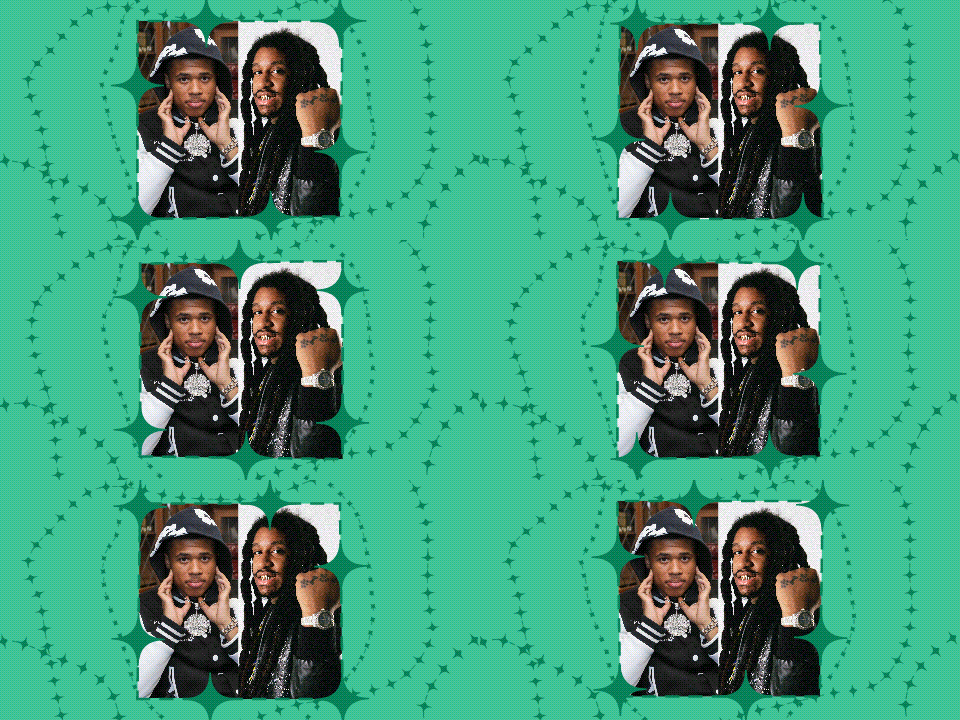
I Tried to Tell You

KP Skywalka begins the standout “Hell or Not,” the penultimate track of I Tried to Tell You, by singing, “[What] am I supposed to do?” His voice cuts in and out like a hazy recollection and Erykah Badu’s sampled voice plays alongside, like he’s riding in the backseat of his mom’s sedan. The southeast DC rapper’s brief trip down memory lane with the ’90s R&B of his youth gives way to asking his little homie if he’s “ready to war up,” laughing at some rapper bragging about “guns that he never shot,” and getting wistful for the days when it was “just noodles and Spam.” Quasi-apocalyptic visions of his Beltway landscape rub up against tender musings, spilling out of KP with a possessed, drill-tinged flow. You get the sense that these moments are closer in his mind than they appear in the rearview.

KP’s adherence to the DMV’s blossoming drill style—punching in with breathless, rambling raps that spare no detail—has become more established even as he’s tinkered with the boundaries of the subgenre. This year’s 4 Tha Freakas and 2023’s Rhythm N Bip approached X-rated, applying groovy R&B flips to player anthems that teemed with sordid accounts of spitting in her mouth and fucking every which way. Even when KP follows fellow scene members like Skino and SlimeGetEm toward more standard Free Car Music themes—morbid corner stories over ominously bouncy beats, like on 2023’s Getting Right the EP—he remains an extremely adept narrator. His lines burst with personality, even if they can feel a tad one-note for long stretches (lyrical predictability being a common trap for this strain of drill).

I Tried to Tell You avoids monotony by bouncing around KP’s musical styles and personal history with limitless energy. His roving narration isn’t limited by regional rap convention: weaving together familial, emotional, and hustling memories in a production landscape that draws from the various roots of Black soul music tradition, the album is a proof of concept that demonstrates what it means to experiment in earnest within the DMV underground scene.

The 20-song tracklist, a departure from 4 Tha Freakas’ brief onslaught of ballads, allows KP room to amble. His beat selection (with production also provided by Turn Me Up Pro, Yoyotheproducer, and Tavaras Jordan) feels as though it’s meant to stitch together soulful touchstones of his childhood: crooning along to the warbling H-Town sample on opener “Industry” on the way to a Wizards game, or reaching into the record cabinet and choosing Anita Baker’s voice to frame his soothing, plugg-infused linkup with 10kdunkin, “Nuntoloose.” DC’s go-go tradition looms large in the way the drums titter underneath a funky, Wayne Shorter-esque saxophone sample on “VPN” as KP melds his delivery to the rhythm. The varied production coaxes out distinct styles: the angelic choral arrangement on “Streets Sing to Me” slows his raps to a crawl, while “A Drop Out” feels like a TLC 12″ (maybe something off FanMail) warped by heat and heartbreak.

Most often KP’s nimble references and turns of phrase arrive under the cover of the hostile drill flow that’s overtaken this kind of DMV street rap. But his style is steeped in the slow-crawl storytelling of the Southern rappers he listened to growing up, and the diligent way he constructs his world on I Tried to Tell You evokes Pimp C’s meticulous autobiography on The Sweet James Jones Stories: Picture KP and his cousin speeding through red lights and goading each other to shoot up the deli (“Scared Like Steele”), or making it up and down the Northeast Corridor before sunrise (“Latenight”). He’s got a hundred variations on the word “bip,” tossing it everywhere like parsley on an IG chef’s channel. Sometimes his musings are routine (“I’m blowing up but I’m stuck in a warzone/Fuck is the bros on, let’s get on Warzone”), or sound morbidly mundane (“I can talk about murder in music because I really done it”). But the continual tweaks to his diction allow simple phrases to escape tedium.

The tension between KP’s inner sensitivity and the hardened shell he’s formed to survive is the emotional crux of I Tried to Tell You. At the outset of “See My Wrongs,” his romantic optimism is potent: “Know it’s some good in the nigga hope that she sees it,” he raps with clarity, before recounting step-by-step how he helped another friend reach his dreams of being a killer in the streets. On “Made It Out,” he remembers a successful headshot, then stutters over his words as he wonders if the pain of losing his own homies made him “d-depressing.” Even when paranoia and melancholy tinge his reflections on fatherhood and family in “Heaven Sing,” there’s still room to fondly remember the neighborhood girl who popped out with a belly ring in the summertime. When his words contradict like this, KP often switches to a higher, sing-song register, as if he wants his truths to carry for miles—no matter if they line up on paper.

What keeps I Tried To Tell You alive and breathing is how clearly KP understands that thematic conventions are made to be broken, and how willing he is to follow his instincts. Gun ad-libs flow out of him in the background of “Itty” like he’s arguing with himself on the track. He treats his collaboration with Skrilla like an away game, skating over calypso drums and sharing custody of their region’s favorite word; he invites DC’s Skino and Philly’s Lil Hawa to take the reins for extended moments in the spotlight. When he returns to the player-anthem bars about stealing dudes’ girls, it doesn’t sound like a labored effort to maintain 4 Tha Freakas’ momentum, but like he’s recounting something that happened right before he waltzed into the studio. Each nugget is evidence that Free Car Music can retain its toughness and bite without sacrificing ingenuity and individual soul. I’m left hung up on KP’s final words on closer “Pockets Flat,” which come after some musings on stacking cash and stomping opps: “Ain’t see grandma in two months, like she want see my face,” he raps, with his voice edited to sound like it’s somewhere off in the distance. The tightrope act goes on.