“Human Behaviour”

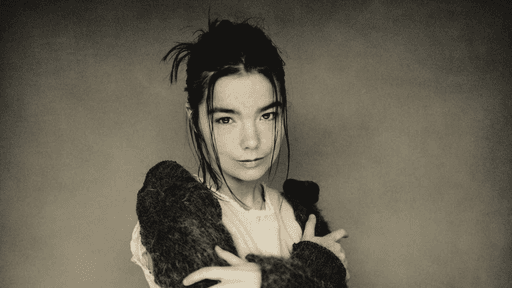
The story of “Human Behaviour” as we know it begins in 1993, when Björk swanned into London in a fluffy white mohair jacket. She was 27 and ready for adventure, so utterly international she could barely eat anything but curries, still high on her late-’80s supply of rave awakenings at all-nighters by DJs with names like Mixmaster Morris.

Björk saw through the idiot elements of British culture but decided to love it anyway, most of all its charismatic mavericks and prankster producers and the anything-goes musicians she took on tour under the banner of Immigrants United. Her creative soulmates were 808 State’s Graham Massey and Debut producer Nellee Hooper, whom she had found “too good taste, too expensive-sounding” for her industrial-techno soul, before he quelled her sophistiphobia by showing how rave and hip-hop beats might coexist with her voice in the plastic paradise of ’90s pop.

“Human Behaviour” was Björk’s formal debut, the salvo of an album so buccaneering and multivalent it could have been called Polygenic. Originally written in her sardonic teens, the song and its lyrics fit the perspective of an outsider arriving in a big city: A child (or in some tellings, an animal) utters conspiratorial warnings to a confidante, marvelling at the oddballs of adultkind. Though it charted modestly in the United Kingdom, the single spawned a landmark Underworld remix and various dub plates that reverberated through clubland, proving to the record industry that a deliriously characterful vocalist could make a post-rave dance record a hit.

The project occasioned a lift in vibe: Björk had spent the years prior serving with the Reykjavík intelligentsia in her old band the Sugarcubes, an accidentally successful cadre of anarchist poets convinced of their solemn duty to demystify stardom. This had been a fine idea, but Björk, through no fault of her own, was a born star and a natural mystic, immune to demystification. She was tired of Iceland, tired of poets, and tired of getting told off for playing Public Enemy on the tour bus.

With the Sugarcubes dissolved, Björk and Hooper’s Debut relished in cartwheeling beats and sensual delights. But its opener strikes a more ominous note. “Human Behaviour” builds on a sample from one of two soundtracks to 1970 movie The Adventurers—a racy American epic that was loathed by critics, audiences, and eventually its own director, Lewis Gilbert. Soon after its release, for reasons undocumented beyond having licence to do what the hell he wanted, Quincy Jones assembled the Ray Brown Orchestra to record a Blaxploitation redux. The original score had been composed by Antônio Carlos Jobim and, in a cosmic coincidence, arranged and conducted by Emuir Deodato, the future Brazilian disco legend whom Björk would enlist to contribute arrangements (and a perfect “Isobel” remix) to Post and Homogenic. From the Ray Brown Orchestra expansion came “Go Down Dying,” the song whose walloped timpani coaxes us into “Human Behaviour.”

The first transcendent moment of Björk’s solo career comes 22 seconds in: a keening cry pitched between lament and yodel, like a glitch in a Celtic funeral song. (This melody provokes a unifying response in the many YouTube videos of “Human Behaviour” analysis: a pure, giddy squeal of musicological delight.) She erupts into heavenly registers and falls back into stutters and pyroclastic welps; she switches from operatic highs to humdrum lows, as if to parody the mixed-up nature of human affairs. Her voice, in accordance with her perceived selves, invokes both conservatoire virtuosity and “yokel” moxie, the realms of gods and mortals. Yet her reckless delivery brokers passage between these worlds, pestering gatekeepers and redistributing riches, like the trickster Loki in Norse myths.

At the time, Björk’s topsy-turvy vocal identity had a bit of a John Cage effect. Her MTV-boosted arrival on the world stage stirred considerable intrigue; to many, though, she was simply a kook. Maybe this was inevitable: “Human Behaviour” is an earworm you can’t really hum, as much in conversation with the avant-garde as pop. A teenage Björk, in defiance of her stuffy music schooling, had studied not only Cage but also the radical turn-of-the-century composer Arnold Schoenberg, whose early operas developed a voice that flickered, glissando-style, between boisterous singing and speech. Schoenberg called the technique sprechstimme, but when you hear it performed now—even if not in Björk’s own, meagerly bootlegged rendition of his Pierrot Lunaire—the style has arrived in the timeless preserve of the Björkian.

On paper, the “Human Behaviour” lyric offers little to chew on, but heard as a cri de coeur—and as her canonical epigraph—it’s practically polemical, setting up a career-long campaign against those who “can’t handle love,” who prize emotional security over emotional truth. I want to say it is all there in the yodel. The emotional brinkmanship, the voice so close to the feeling—how could you go on as you were after that? Already she was on such familiar terms with the inexpressible that she could tie its braids and enjoy its heat, never asking for a word of reassurance. Her most maddening, ineffable melodies somehow bypass emotional signification and smack you with an excess of the real—as if, sitting just beside you, I were to grab a biro, stab my eyeball, and pop it into your palm. Suddenly we are here, two humans forced to take the world as it is.

This must be what people mean when they compare Björk’s voice to something like “an ice pick through concrete,” as U2’s the Edge once put it. The concrete is our armor—the reality we make through rituals, routines, and repetitions to secure a life of few surprises. The social performances that Björk puzzles over in “Human Behaviour” are the same ones these vocal stunts lay bare; her easy acrobatics make a mockery of the everyday games we play to suppress terror, elation, too-muchness. The real kooks, “Human Behaviour” suggests, are those who never find their yodel—who will never look you in the eye, pick up that biro, hold it like a microphone, and sing.

Additional research by Dierdre McCabe Nolan