“Chase”

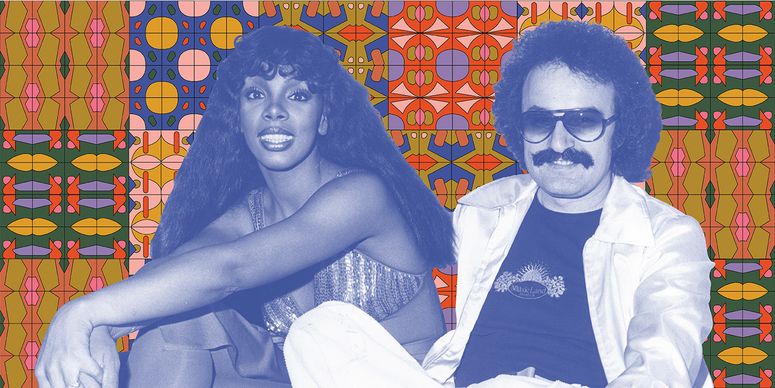
Twelve years and a seemingly unfathomable stylistic gap separate Giorgio Moroder’s bubblegum origins and the icy erotic panache of “I Feel Love,” his history-changing 1977 hit with Donna Summer. You might detect a similar gulf between “I Feel Love” and Midnight Express, Moroder’s first soundtrack project, even though the latter followed his robo-disco masterpiece by just a year. Directed by Alan Parker and written by Oliver Stone, Midnight Express was based on the memoir of a hapless young American hashish smuggler, Billy Hayes, who served five years of a life sentence in the Turkish prison system before making his dramatic escape in a stolen rowboat. But “Chase” turned the grim, violent, often xenophobic movie into disco gold.

By mid-1978, Moroder had released 11 albums and produced fistfuls of hits for Donna Summer, while his Musicland Studios, in Munich, had turned out records by the Rolling Stones, Led Zeppelin, Deep Purple, T. Rex, Iggy Pop, and even Faust. Yet he’d never scored a film. Moroder wasn’t the filmmakers’ first choice, in fact. American Film magazine reported that co-producer David Puttnam wanted Electric Light Orchestra, but after negotiations with the British prog band went nowhere, Parker cut the film to a provisional soundtrack of previously released Vangelis material. When Vangelis, too, was unavailable, Puttnam turned to Casablanca Records head Neil Bogart for help; Casablanca’s film division was behind the production of the movie. Bogart, who loved Moroder and Summer’s 1975 Casablanca Records hit “Love to Love You Baby” so much that he requested a side-long extended version of it—he deemed it “a beautiful, great balling record”—suggested Moroder for the gig.

Parker flew to Munich to meet with the Tyrolean composer. There, he showed him the Vangelis cut of the film and asked if he could write a synthesized score. Moroder later recalled, “Basically, he liked the music I had done for ‘I Feel Love.’ And there’s one scene in the movie where a guy escapes and he said, ‘Give me something in the style of “I Feel Love”’—something like a bassline that gives the feel of him escaping, to get some suspense. And he liked the piece I did. And the rest was very easy.”

“I Feel Love” was probably the last thing on the mind of viewers who first encountered “Chase” in the cinema. The song turns up early in the film. After being arrested at the Istanbul airport with foil-wrapped packets of hashish duct-taped to his chest, Billy is taken by a mysterious American—whether consular officer or spy is never made clear—to the city’s central market to finger the dealer who sold him the drugs. The mood is ominous, colored by a gravelly synthesizer drone. (Moroder has professed his fondness for Tangerine Dream; their influence clearly colors the Midnight Express score’s atmospheric passages.) As Billy gets up from his table in a crowded cafe and feints left at the front door, the telltale arpeggios of “Chase” kick in, and the chase is on.

Moroder’s synths rise in volume as Billy sprints through the crowded streets and fall away when he ducks inside a poultry stall, two detectives in suits and aviator shades hot on his tail. When he accidentally overturns a crate of chickens, the tune comes rushing back in an explosion of metallic clang and zapping lasers. The scene’s finale takes place on an empty staircase, synths fading as Billy looks around and grins, thinking he’s free. But the camera pans to reveal the American’s pistol pointed at Billy’s head. “You seem like a nice enough kid to me, Billy,” he drawls in a Texan accent, both hands clutching the gun. “But you try it and I’ll blow your fucking brains out.”

The whole thing is over in less than three minutes. The song is actually a slightly incongruous choice for the film; while the bass arpeggio instills the requisite drama and suspense, the main melody—which the film’s editor barely uses—is jaunty and major-key, more in keeping with Moroder’s rivals Kraftwerk. It’s on the soundtrack album that “Chase” truly shines, at its full eight-and-a-half-minute length. And on the dancefloor, of course: Discothèques primed by the robotic throb of the previous year’s “I Feel Love” now convulsed to the equally rigid yet sensual pulse of “Chase.”

When Parker requested a song in the style of “I Feel Love,” Moroder clearly delivered: “Chase” is in a similar key, and rides a similarly hypnotic arpeggiated bassline that chugs away with motorik determination. Part of what had made the previous year’s Donna Summer hit so beguiling was the delay Moroder applied to its synth bass, making the ostinato figure seem to vibrate in midair—he uses the same effect to even more extreme ends on “Chase.” As the bassline churns away atop a muted 4/4 kick, backlit by a flanged synth pad, slapback delay blossoms around it, turning the timekeeping woozy and gelatinous.

As he did with the stereo panning on “I Feel Love,” Moroder does the same thing here, with reversed cymbals hissing in the right channel and open hi-hats in the left. The groove is actually less rigid than that of “I Feel Love,” thanks in part to a snare that sounds like the work of a human drummer, deep in the pocket but never mechanically so.

The song’s central feature is its contrapuntal melody, which periodically rises up above the bassline like a pair of Renaissance Faire pennants—a call-and-response between a squelchy synth figure and an answering riff that sounds almost like an oboe. It’s as catchy as anything Moroder ever wrote. He has said that Wendy Carlos’ Switched On Bach was his introduction to the synthesizer, and “Chase” bears that out: The friction between its classical air and the song’s trance-inducing, proto-acid throb—filters in constant motion, drums dissolving into dub delay—that makes the whole thing so intoxicating.

The Midnight Express soundtrack won an Oscar—Moroder’s first—though Puttnam, the film’s co-producer, told American Film that he suspected the Academy granted it the award in part because voters had failed to nominate the Saturday Night Fever soundtrack the previous year. “Too many questions were asked of the Academy’s attitude toward modern music,” he said. “So, to an extent, Giorgio had the Bee Gees to thank for that.” Moroder went on to a successful career in Hollywood; in fact, throughout the 1980s, he was more prolific as a soundtrack composer than as a solo artist, scoring films like American Gigolo, Cat People, Flashdance, Scarface, and The NeverEnding Story, for which he also wrote era-defining hits for David Bowie, Irene Cara, Blondie, and Berlin.

But the song’s true legacy can be found in its influence across decades of electronic music.

Detroit techno pioneer Juan Atkins released a song called “The Chase” under his Model 500 alias in 1989, and while it might not sound much like Moroder’s song, it’s hard not to imagine that he had the German producer in mind, having been schooled in Moroder and Kraftwerk by the pioneering local radio DJ Electrifying Mojo. Paul Oakenfold, Junior Sanchez, DJ Sneak, and Jam & Spoon remixed “Chase” in 1999, updating the then-decades-old hit for trance and house fans—and paving the way for a remix industry of Moroder’s work that continues to this day. (Just last year, German techno producer Matthias Tanzmann released yet another spin on the track.) The Norwegian disco of Hans-Peter Lindstrøm, Prins Thomas, and Todd Terje is virtually unthinkable without the example of Moroder’s “Chase”; everything from their synth patches to their rubbery grooves to their slyly insouciant melodies stems directly from the song’s delirious sprawl. The song cast an equally long shadow across film soundtracks, as even a cursory listen to Drive or The Social Network can attest. And Daft Punk, who resuscitated Moroder’s long-dormant career with his cameo appearance on 2013’s Random Access Memories, are almost certainly fans of “Chase”; the song’s voltage-controlled pulse and lovingly modulated synths sketched out the blueprint for much of their catalog.

Moroder, now 85, is still DJing. His tireless electronic beat keeps going; the chase continues.