Behind the Mask: Masque on Control, Vulnerability, and Writing Without Pity
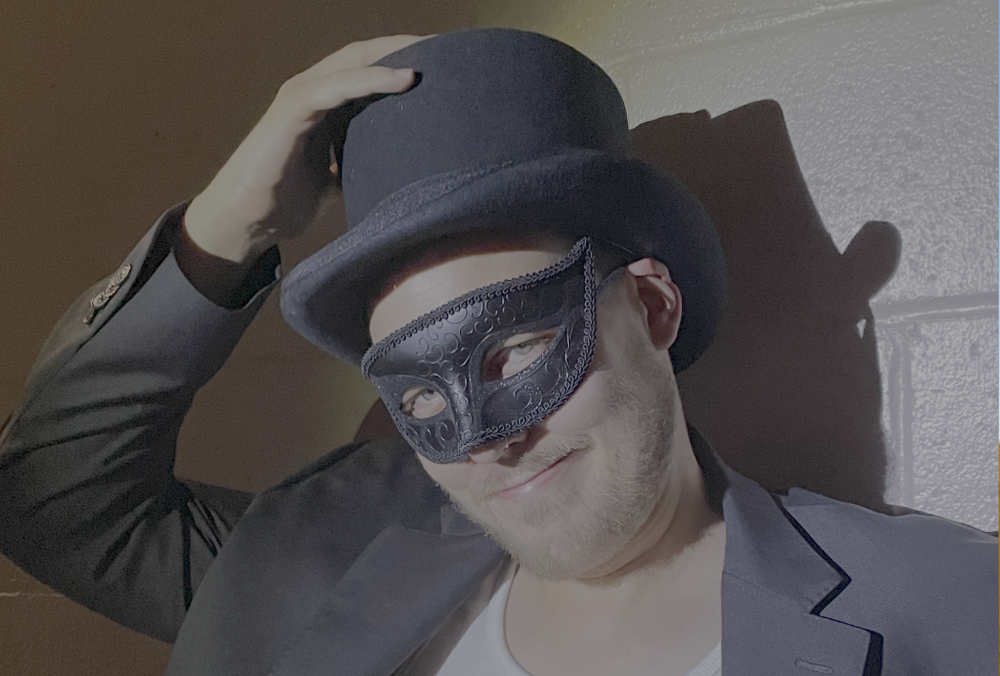
For Masque, the mask is not a wall — it’s a framework. While the symbol suggests concealment, his music does the opposite, pressing into emotional honesty with discipline and intent. Rather than using persona as escapism, Masque treats it as a means of control, a way to protect what keeps him grounded while still confronting the world head-on.
In this conversation, Masque speaks with striking clarity about vulnerability without self-pity, the precision required to translate emotion into song, and the tension between spectacle and restraint. He reflects on mental health from a place of hindsight rather than collapse, on existing outside traditional rock masculinity, and on the influence of artists like Lady Gaga, who balance theatricality with emotional truth. What emerges is a portrait of an artist less interested in bravado than in forward motion — documenting survival, not asking for sympathy, and shaping discomfort into something purposeful.
- The name Masque implies concealment, but your music feels confrontational. What are you protecting, if anything, by performing behind a symbol?
I’m protecting my love, protecting my heart. Everything that keeps me strong, everything that allows me to confront the world, I keep well guarded.
- Many artists use personas to amplify confidence. Do you use yours to gain control, or to give up control completely?
This is very much an act of taking control of my life. Though it’s a persona, it allows me to find my identity and grants me control of my life.
- “Save Me, Lady Gaga” suggests desperation without irony. Is that something you’re comfortable sitting with publicly, or does it still feel risky to admit?
I think the expression goes, ‘The greatest fear of an artist is the fear of being known’. It always feels like a risk to be so open, but I cannot be a true musician without opening up my heart.
- You often write about isolation without asking for sympathy. Where does that restraint come from?
If I focused on asking for sympathy, it would feel a bit too self-centered. While a bit of self-centeredness can be healthy, I’m not here to ask for pity, I’m here to show the world how I pick myself up and move forward.
- Rock music has historically glorified chaos and ego. Your work feels more introspective. Do you think modern rock needs less bravado and more self-examination?
The irony is, I enjoy some of the modern rock bravado, as I can put myself in the singer’s shoes and use it to build up my spirits. That said, I think there’s a reasonable amount of self-examination in the rock genre by some artists.
- There’s tension in your songs between emotional exposure and precision. Which part of that balance is the hardest to maintain?
The precision. It’s easy for me to write an emotional song, but I can become so entrenched in my feelings that the meaning becomes muddled. It then becomes about adding the precision, and I think Save me Lady Gaga achieves just the right balance.
- When you’re writing about mental health, are you documenting something in real time, or processing it after the fact?
Most of the time, I’m writing after the fact, thinking over the journeys I’ve been through. While I occasionally write something in real time, I usually find the emotions too overwhelming to express myself properly
- Being openly gay in rock still places you outside certain expectations. Do you feel that friction shaping your sound, or do you actively ignore it?
I can’t be the stereotypical super-masculine rocker — so I don’t bother trying. I love a hard sound, and I infuse it with my own style without hesitation.
- Midnight Flames received formal recognition, but external validation can complicate things. Did that moment sharpen your confidence or your self-doubt?
It was definitely a confidence-boosting moment. For any up-and-coming artist, it’s tricky finding new things to motivate yourself, and so the Best Rock Album nomination really gave me a boost.
- Your influences are known for spectacle. What’s the danger of spectacle when it stops serving the song?
Spectacle alongside softer music can take the audience out of the experience. When a song deserves to be more withdrawn, the audience feels confused to hear really big production. However I do feel my influences, notably Lady Gaga, are good at finding the right balance.
- Do you ever worry that listeners might misunderstand the mask as distance rather than intention?
Any persona or overly-stylistic performance choice can distance the artist. But making these choices is a well-worn path, and I feel I am still able to connect with my audience.
- If your music leaves someone unsettled instead of inspired, does that align with what you’re trying to create?
Save Me Lady Gaga? No, this is not a song that should leave someone unsettled — it should leave people excited, in a good mood, or just energetic. That said, I do have other songs that are intended to leave people unsettled, and they exist on my albums to take the listeners on specific, emotional journeys.