Fanny Hill: The Feminist Rock Utopia That Time Forgot
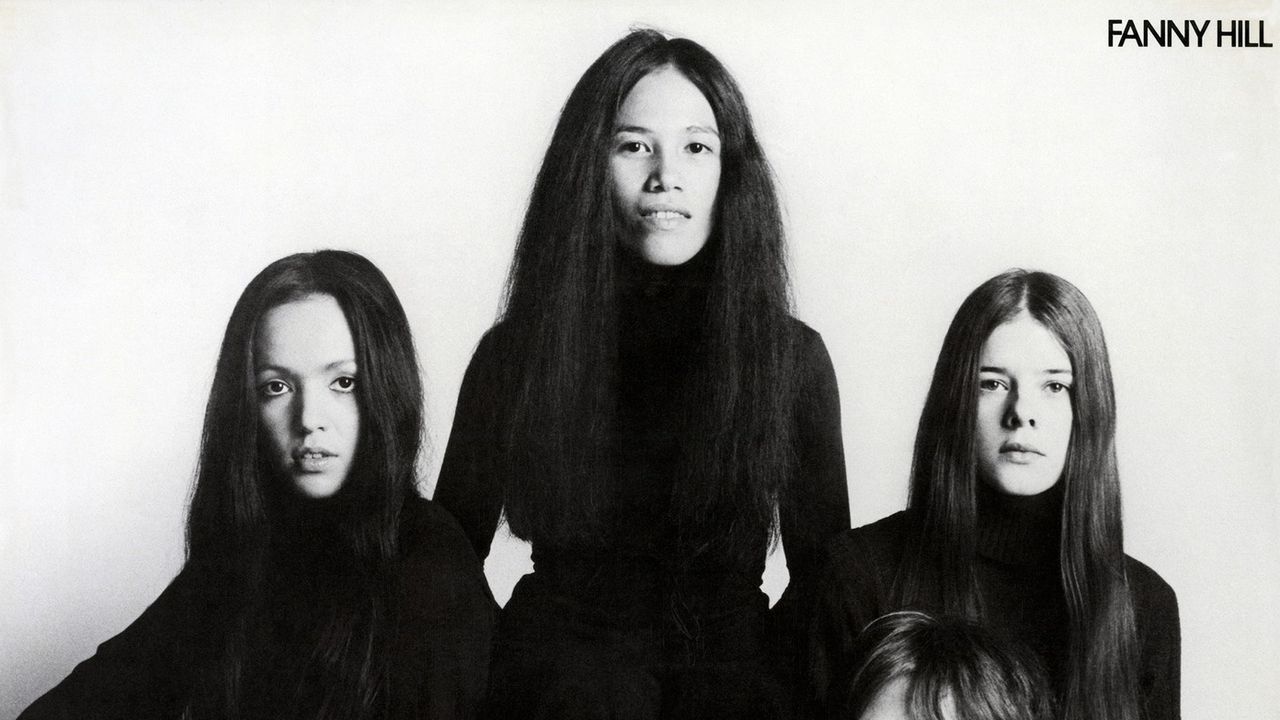
For as long as there have been men, women have envisioned a space without them. In the 15th century, the French writer Christine de Pizan imagined a “City of Ladies,” a woman-only utopia where liberated women of history hung out. Skip forward several centuries to 1915 and find yourself in “Herland,” another war-free, woman-only creation, this time care of American author Charlotte Perkins Gilman. Just about 60 years later, artists Judy Chicago and Miriam Schapiro—alongside a group of their students—brought one vision of feminist utopia into the real world. Though it was only open for one month in 1972, Womanhouse is widely considered one of the most influential works of contemporary art: an immersive exhibition in which the artists renovated a dilapidated house in Los Angeles, lived in it, made visual art, and staged groundbreaking performance pieces.
A Feminist Utopia on the Sunset Strip
But just a few miles away from Chicago and Schapiro’s avant-garde wonderland, in West Hollywood, lay another IRL feminist utopia called Fanny Hill. The house—a Spanish-style home that overlooked the Sunset Strip—shared a name with an oft-banned 18th-century erotic novel, and also with the 1972 album by the band Fanny: a real rock spectacle laced with tenderness, camaraderie, and impeccable riffs. The members of Fanny—sisters June and Jean Millington, Alice de Buhr, and Nickey Barclay—all lived in the house with some friends. It was a welcoming paradise: Some lived up the rock’n’roll lifestyle; one woman was raising a child. De Buhr’s mother had previously sent her to a psych ward for being gay; at Fanny Hill, her queerness wasn’t under scrutiny (and was in fact an identity she shared with her bandmate, June). But their feminist utopia was mainly grounded in music: writing, jamming, and practicing in their basement every day until they were exhausted. Friends and fellow musicians were always coming through Fanny Hill; Bonnie Raitt, for example, was a regular fixture. The hosts were even so gracious as to include men: The Band liked to jam downstairs; Joe Cocker often stopped by. “It was like we had our own sorority,” June Millington once explained. “But we had amps.”
The Legacy of Trailblazers
The songs they practiced in that house combined a love of classic rock’n’roll with tight pop harmonies. Fanny howled; they grooved; they had the patience for a few pensive ballads. Throughout the ’70s, they’d record five studio albums, play shows with Jethro Tull, Steely Dan, and Chuck Berry; befriend the Beatles; and even blow the mind of David Bowie. “They were one of the finest fucking rock bands of their time,” he once told Rolling Stone. “They were extraordinary: They wrote everything, they played like motherfuckers, they were just colossal and wonderful.”
But he went on to make an important point: “Nobody’s ever mentioned them,” he said. “They’re as important as anybody else who’s ever been, ever; it just wasn’t their time.” Bowie made this pronouncement in 1999, and not much has changed since. Fanny were trailblazers: the first all-woman group to be signed to a major label and release full albums. But they aren’t in the Rock & Roll Hall of Fame; they’re rarely mentioned in lists of the greatest hard-rock bands of the ’70s, or in the same breath as pioneering all-woman rock bands like the Runaways or the Bangles. In a way, Fanny Hill, their best album, predicts this possibility of erasure and pushes against it. The songs—defiant, tough, compassionate, self-assured—could only have been crafted by outliers: those who know both how the system works and what it takes to build your own fortress outside it.