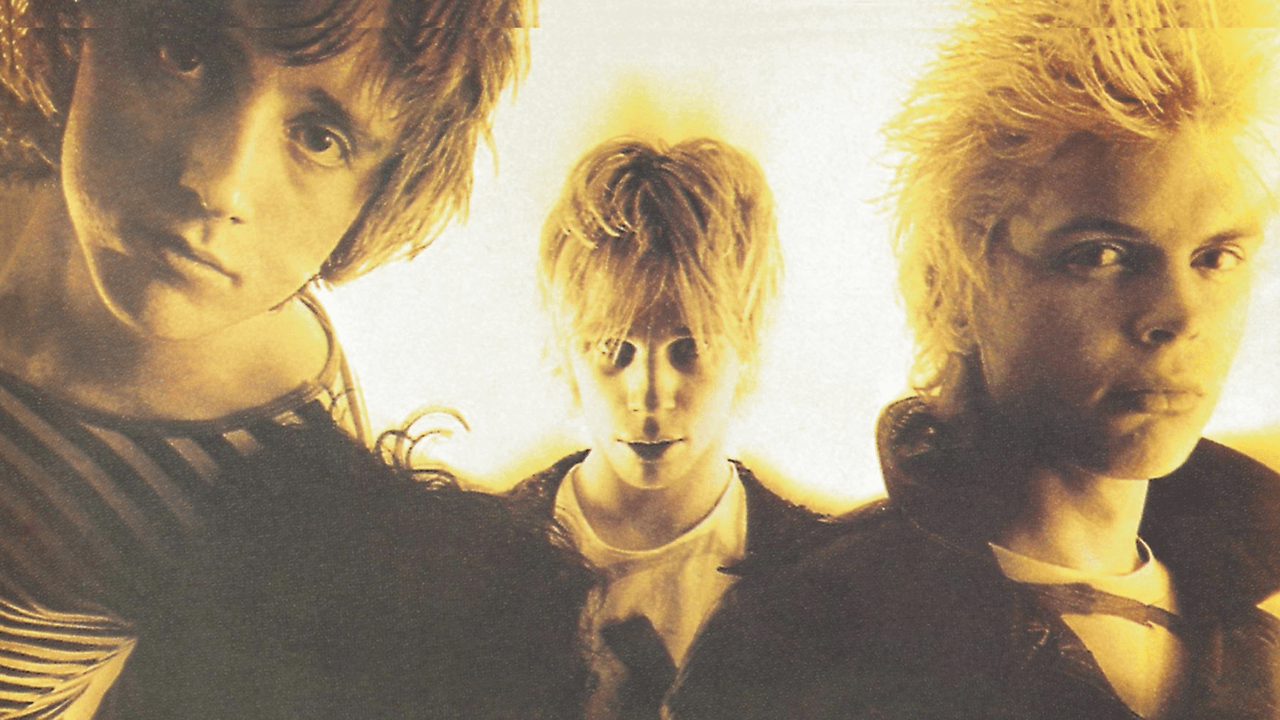
Generation X

On August 5, 1976, Big Ben exploded. It was a mechanical failure so catastrophic and so loud that the London policemen on duty initially reported it as a bomb set by the Irish Republican Army. Over the next nine months of repairs, time started and stopped sporadically.

This was punk rock’s Year Zero. Joe Strummer of the Clash sang that there would be “No Elvis, Beatles, or the Rolling Stones/In 1977,” and Johnny Rotten of the Sex Pistols snarled that there would be “no future for you.” British punks were “disgusted” by history, the journalist Caroline Coon wrote in 1988, her formative report on the punk explosion. “Nostalgia is a dirty word.”

Reader Score

No score yet, be the first to add.

0.0

Generation X emerged from the same clustered London scene that spat out these feral iconoclasts. They wore the same torn and safety-pinned clothes, played the same sped-up and distorted rock’n’roll in the same clubs to the same dropouts and punks and vandals. Billy Idol, their frontman, was a member of the Bromley Contingent, an influential cluster of Pistols acolytes on the early punk scene, alongside Siouxsie Sioux and the archetypal model Soo Catwoman.

But they made themselves unwelcome in the revolution. They appeared on Top of the Pops to mime performances for a prime-time BBC audience, and were featured, pouting as pin-ups, in teeny-bopper magazines like Fab 208 and Jackie. Idol had porcelain features and dyed-platinum hair; he was pretty. And above all he was spreading heresies. “I was in love with The Beatles/I was in love with the Stones, no satisfaction/I was in love with Bobby Dylan/Because I’m in love with rock’n’roll,” he sang on “Ready Steady Go!” a song named after a light entertainment show loved by the nation’s mods a whole decade earlier. The clock never stopped for Generation X; Year Zero never came.

Still, their debut, Generation X, remains one of the most compelling and influential albums of its era, a record that belongs next to BuzzcocksAnother Music in a Different Kitchen and the Undertones’ self-titled LP in the canon of great early pop-punk albums. It combined the urgency of early London punk with razor-wire hooks and ambitious structures that most other bands in Britain’s “new wave” wouldn’t dare to touch. Fifty years on, Generation X still sounds like youth in revolt: fighting, fucking, and fucking up.

They were brought together by John Krivine and Steph Raynor of the foundational punk clothing store Acme Attractions (a half-mile up the King’s Road from Sex, where Malcolm McLaren had manufactured the Pistols). Idol, a university dropout who’d spent his summer at the Pistols’ 100 Club residency, brought in his friend Tony James, of the horribly named but now cult-legendary proto-punk band London SS (which also included Mick Jones and Brian James, future co-founders of the Clash and the Damned, respectively). They joined drummer John Towe and frontman Gene October in the short-lived band Chelsea and played two shows over four weeks before the band abandoned October mid-set and struck out on their own. They named the new band Generation X after a paperback they found on Idol’s mother’s bookshelf: a series of interviews with young people growing up in the wake of the Second World War, hating their parents, and lashing out at authority. They shuffled Idol into his natural position behind the microphone and brought in Derwood Andrews from rocker band Paradox to fill the space.

Their early demos sounded weirdly equivocal, as though they were hiding something ideologically impure under their tattered shirts. Andrews was a clever guitarist, and running him through an amplifier that sounded more like a frying pan mostly hid the fact that he was playing power pop licks between bursts of chainsawed chords. And though Idol postured as a punk on tracks like “Your Generation,” he pulled back just as fast. A line like “Your generation don’t mean a thing to me” sounds less threatening when it’s followed up with a compromise: “Might take a bit of violence/But only violence ain’t our stance.” This wasn’t exactly Steve Jones calling Bill Gundy a “fucking rotter” live on Today. The single version of “Your Generation” was even recorded by Phil Wainman, famous for producing the insipid Bay City Rollers. Wainman and the band both seemed to hate the experience. Towards the end of those sessions, Idol, obsessed by the un-punk notion of public adulation, kept asking if Wainman thought Gen X would “make it” as a band. “Well, you’re absolutely bloody talentless,” he replied, “but you look great.” (He was jettisoned soon after.)

Their peers and heroes in first-wave punk were making music a means to an end. Gen X was music as an end in itself. “Well I’m no nazi and I’m not left-wing/Just wanna play and that’s what I’m doing,” Idol sang on another early cut, “Save My Life.” That outlook earned them the scorn of much of the British music press, particularly the hugely influential NME. Ian Penman wrote in one early live review, “Generation X are a middle-class Slade, bit more musical grace, bit more photogenic appeal, but essentially from the same universe, where you either ‘enjoy’ yourself or you pig off.” Profiling the band in August 1977, Phil McNeill concluded that beneath the posturing, there was a void: “They want the right to do what they want, but what do they want to do? Dye their hair blond and lacquer it into little pieces, play loud rock’n’roll, that sort of thing.”

It’s no wonder that some critics found Gen X underwhelming compared with the concussive Pistols and the cerebral Clash. In the year between the releases of “Anarchy in the UK” and Generation X, a handful of sneering kids (typified by the Bromley Contingent) had seemingly grown into a full-blown counterculture, a moral panic that could become a genuine threat to the established order. In that context, this preening dreamboat miming along to a song about loving the Beatles and having a crush on a TV presenter might have felt featherweight.

But in their search for some sort of coherent manifesto or righteous ideology in first-wave British punk, these critics missed the point. John Lydon only called himself an “anarchist” because it (sort of) rhymed with “Antichrist,” and the Damned were striking the same anti-everything pose as Idol on 1977’s “Politics”: “No rules, no laws, no regulations/No fascist friends, no race relations/I just want to run around/I don’t want to settle down.” Punk was an explosive reaction to peace-and-love hippiedom and the bloated rock excess that dominated the mainstream, but that doesn’t mean that it was inventing something new from out of the ether. Year Zero was a lie. Instead, punk was prelapsarian: a return to rock’n’roll’s roots, its immediate impulses, its youthful thrills. Sex Pistols and the Clash formed because they saw the Ramones at Dingwall’s and figured they could do that too; London punk coalesced around kids seeing the Pistols at the 100 Club and thinking the same. “Whenever rock and roll starts getting carried away or diluted, something always yanks it back to where it started. That’s what punk was all about,” Idol told Robin Katz in a 1978 Daily Star interview.

In that context, Generation X is a vital expression of punk’s ethos. The guitars sound metal-plated, Idol’s voice soars and sneers, and the melodies hit like bricks to the forehead. The shouty “Youth Youth Youth” is a manifesto on teenage independence built around soccer chants and power chords (“Don’t wanna spend my life savin’ up for things/I don’t wanna have what a steady job brings”). On “One Hundred Punks,” Idol takes the rush of a subculture taking over the city and distills it down to “a hundred good mates you know you can trust.”

The best song on Generation X went even further, a punk ballad about teenage sex, football violence, and the thrill of having a city as your playground. “Kiss Me Deadly” was inspired in part by Bruce Springsteen’s “Jungleland.” It’s a four-and-a-half-minute mini-epic exploring the hormone rush and the urgency of youth, rather than just expecting distorted guitars to make it self-evident. It opens with Idol singing almost plaintively over Andrews’ clean guitar about a rockabilly show. A switchblade glimmers, two kids fall in love, and the ecstasy is the same both times. There’s a riot on the terraces at Fulham Football Club’s Craven Cottage, where a “battle is won and lost.” A thousand black and white bar scarves fly, two kids discover sex in a basement room, and heroin is just another kick worth trying on a day skipping school, “having fun in South-West Six.”

Released on Chrysalis Records, Generation X climbed into the UK Top 40, giving Idol more chances to mime on the BBC. Critics in America—who’d had the New York Dolls, the Ramones, and a thriving “new wave” scene for an extra half-decade—were kinder than the NME had been back home. In a positive review at Trouser Press, Ira Robbins argued, “Punk wasn’t (and isn’t) what Billy Idol and band are about. Basically, they’re a powerful teeny band… innocuous rockers bringing punk down to the level where a ten-year-old can understand it.” Idol himself would have been happy with that. “It’s great to get into magazines and have kids buy our records rather than the Bay City Rollers or any of that factory-produced music which is trash,” he told Sounds that spring after Generation X was released. “You reach an audience you might not otherwise reach—get ’em while they’re young—before they leave school and fuck up.”

However that’s not how Generation X turned kids away from trash. The band released two more albums before breaking up. 1979’s Valley of the Dolls more explicitly borrowed from glam and rock’n’roll, and 1981’s Kiss Me Deadly was more ambitious structurally and sonically, belonging more to the burgeoning new wave scene that would explode over the next half-decade. By then, Idol was already mentally checked out, ready to strike out on his own, and later that year, he moved to New York and released his first EP as a solo artist. The back half of the EP comprised two songs from those early Gen X demos, “Untouchables” and “Dancing with Myself,” both sanded down, relacquered, and prepared for a mass market. When MTV launched that August, the pretty boy with the hair was in his element, and his early singles practically played on repeat. He’s still touring. He’s sold roughly 40 million records. One of his biggest songs, “Rebel Yell,” is less about rebelling than it is about bourbon and fucking. If you haven’t seen the new documentary on his life, Billy Idol Should Be Dead, you might have seen him on adverts selling AI platforms alongside Travis Barker and Gwen Stefani.

But Generation X took on a life of its own. It was one of the first punk albums Ian MacKaye heard, one of Henry Rollins’ favorite albums ever, and a touchstone for the East Bay punk scene that spat up Green Day. Shorn of all its context, the accusations of being too nice or too clean or too posed, Generation X traveled in its purest form: an album about a fleeting feeling of immortality, running around town with a hundred of your friends, fucking and fighting and having fun.