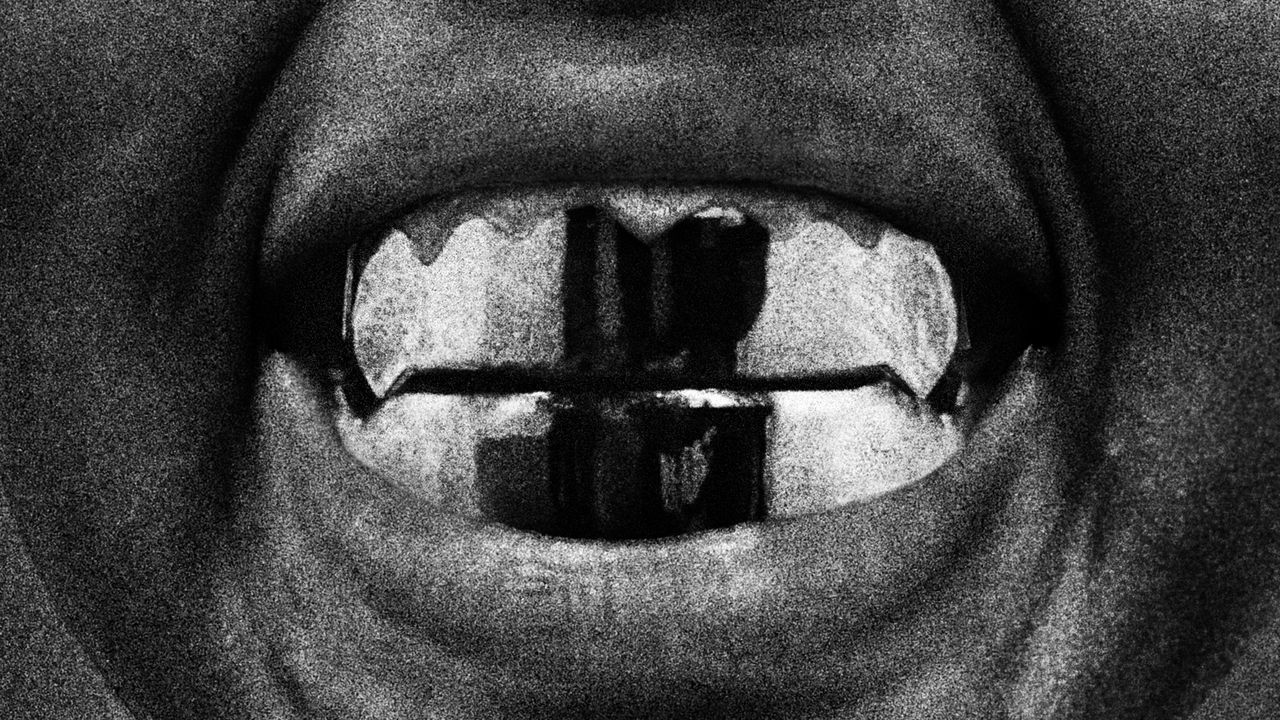
Bully

The distortion field around Ye the performer and Kanye West the person makes it tempting to treat his newest album as a glorious return to the artist—the one who didn’t sell swastika merch. On Bully, he’s done away with the references to Hitler chains and untrustworthy Jews, and even the creepy soundbites of his ex-wife and disturbing ballads to his current wife. The bar is low, so it’s actually a relief when a zombified Ye does his best impression of his own past music: He’s a little underdoggy, a little indignant, a little meditative, drifting in Auto-Tune and rapping over an array of top-shelf samples. But even giving Ye some grace and squeezing your brain through the barbed-wire fence of context that threatens, at every turn, to ruin your enjoyment of the music, all you’re left with is a cheap hit of retro-Kanye—a copy of the classic spectacle.

Bully feels custom-designed to please the diehards exhausted by his noxious antics. Throw in some 808s-style Auto-Tune warbling here, some abrasive metallic beats from Yeezus there; add a Graduation reference, Chicago shoutouts, chopped-up soul samples. He even escapes his myopia to briefly acknowledge “mothers fightin’ for a livin’ wage” on “Punch Drunk,” one of the wooziest tunes blitzed silly on a shivery sample from the gospel act the Clark Sisters. “Beauty and the Beast” is slight and pretty, orbiting a hopeful image of a guy energized off “fresh new tires.” “All the Love” has the blissful throb of a radio hit from another era, cruising with ’80s synths and André Troutman, cousin of the legendary Roger Troutman, singing sweet talkbox affirmations. But then you remember that its original title was “Gas Chambers,” and the new lyrics Ye added—“We don’t have to hold on/To pain we left behind”—start to ring trite and desperate.

Reader Score

No score yet, be the first to add.

0.0

Most of the album is trapped in a nether-realm between post-breakdown and pre-whatever’s next. Ye’s a narcissist who knows he fucked up but doesn’t want to take ownership of it, so he softens to a slightly deflated ego, blaming the “system” and hiding shame in calls for rebirth. A shorter 10-track version of this album, BULLYV1, was released in March 2025, so it’s tough to pin down exactly what his foggy admissions and pronouncements are about, and which were written in the aftermath of his conveniently timed full-page apology to Jewish people in The Wall Street Journal this January. These are redemption raps with only the vaguest sense of what redemption might look like, a wishy-washy desire to both stomp the haters and be widely loved again. All we get are almost-lines like “I’m back to life like an Epi-Pen,” as he declares on “Father.” He says he’s “kicked the ego out of the door,” but also: “All the people swear my ego needs a repo/I won’t let go.” You can sum up the enervated waffling with the murky shrug of, “Had a change of heart, I felt different at first/Lot of pain, lot of hurt, but still, could’ve been worse.” Hopefully it means Ye is in a better headspace, but why should anyone care, let alone give him kudos for such weak introspection and feeble, characterless music?

It feels so empty partly because of the shoddy scaffolding—a majority of songs are around two minutes or less and devoid of curveballs. “Damn” is DOA, cycling through the same verse three times like a cursed hymn. Any Ye fan could predict what he says on “I Can’t Wait” before hitting play: jabs at industry execs and conspiratorial mumbling. “Circles” is so laughably undercooked that it almost comes out the other end as a clever meta-statement on his own behavior patterns. Between a telephone booth-quality Don Toliver feature and an AI remake of the overused sample “Huit Octobre 1971” by Cortex, Ye limply mewls, “Circles, circles.” Ye’s core talent was always his ability to dig up grand, poignant samples and make them feel like his private chorus, earthbending them around his presence until he seemed in control of the whole universe. He has the samples but not the vocal sharpness here, using slowed-down Supremes and devotional monologues as emotional shortcuts instead of the launchpad for outpourings.

Where some thrill on a Ye album usually comes from freakish out-of-pocket bars (“Yeezy airbags when I’m crashin’ out” and “I brought a white queen to the altar/Couldn’t happen without Martin Luther” are the best offerings here), Bully only really ever catches you off-guard when Ye isn’t just running through his stock flex and confession options. There’s a tender ache in his voice on the title track as he calmly describes his system running amok. “I wanna beat somebody up/Like a bully,” he states, his voice curling as he arrives at a meaningful conclusion. The title of the record neatly describes the way he’s tried to force his will onto the world while hinting at the insecurity that lies beneath. The little boy, lost inside the scrambled megalomaniac now known as Ye, peeks his head out on “Mama’s Favorite,” which includes a snippet of dialogue between him and his mom from the 2022 documentary jeen-yuhs. While it partly feels like a tactic to stir sympathy, and sanewash his faults (“Do you think I come off too arrogant?” he asks his mom; “No, [you] come off just right, ’cause it’s what’s inside, because you can’t be a star and not be a star,” Donda West assuages), it reminds you he’s a human who craves reassurance.

Maybe Ye’s flat tone is the reality of middle age (he’s 48), or the toll of his alienating behavior. It could also be the result of rushed mixing and frenzied last-minute re-recording, as he is wont to do. And since the album came out, hordes of fans have turned into armchair investigators, trying to assess which songs may contain AI. We’ve really lost the plot when hearing Ye’s real voice on a record is considered a great victory for his music.

At the very least, “Highs and Lows” seems to use a hollow reproduction of French singer Pomme’s “soleil soleil,” which she refused to clear because of Ye’s “political positions.” The first passage of “Preacher Man,” where he teases the arrival of a “light-bearer to lead you home,” has the overperfect simulacra shimmer of an AI voice. But then it crosses over into a raw, seemingly human voice, which, if intentional, is an interesting effect. Especially because it leads into some of the most traditionally cocksure Ye lyrics on Bully: “Light ’em up, beam me up/The only GOAT, the genius one.” There is perhaps another, more intriguing album hidden within this one, where he seizes on the premise teased in lyrics like, “Don’t feel at home by myself/Feel like a clone of myself.” Inner emptiness has always been a fixation of Ye. He’s the guy who revolutionized the use of Auto-Tune on 808s & Heartbreak, so if anyone could find a way to shake realness out of AI clones, it would be him.

But nothing new is sought with Bully, except Ye’s own public rehabilitation. His last tape, the leaked, unreleased CUCK, which was allegedly ghostwritten by Dave Blunts based on conversations he had with Ye, sprayed out plaudits for Hitler and demands to free Diddy. But it was at least, at times, a shockingly vulnerable clusterfuck unlike anything a major star has released in history, and with unexpectedly hooky samples of underground rock and classic acid house. Even at his bleakest moments of self-professed nitrous and porn addiction, when he was prohibited from seeing his children, he still knew how to make a song. Bully’s real curveball is the lack of Ye, even after he re-recorded it with human vocals. He’s on every track but also somehow none of them, making a case for redemption and not sounding very convinced by it himself.