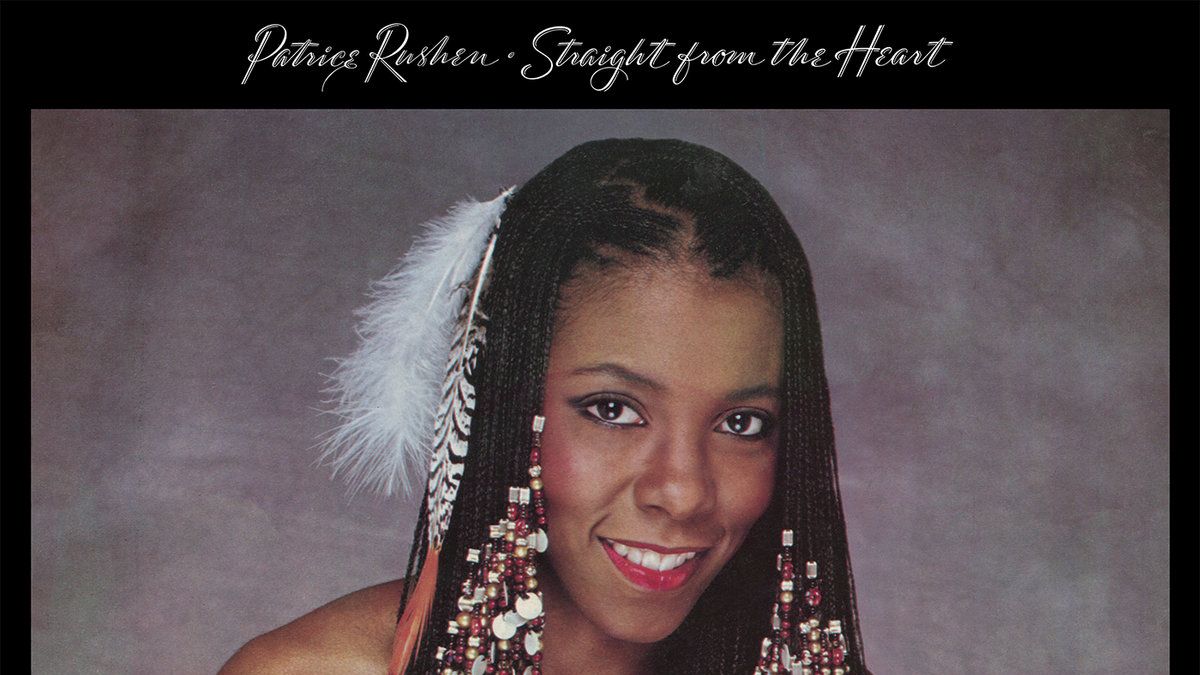
There are talents so enormous that their reputation precedes them, their feats whispered in hushed tones in cafeterias and on street corners. Little league batters so skilled their names are known three counties over, by kids who’ve never seen them play—pint-sized John Henrys at bat. In Southern California jazz-band circles in the late 1960s and ’70s, Patrice Rushen was just such a figure. Her name rang out before she had even entered a recording studio. In 1972, days before the Monterey Jazz Festival, co-founder Jimmy Lyons told of a maestro in the making: “Wait until you hear Patrice Rushen play piano on Sunday afternoon,” he said to a reporter from the San Francisco Examiner. “She’s 17 and she’s a gas.”
Lyons had good reason to be confident in the allure of the festival’s starpower; he’d helped stock the 15th edition with jazz icons like Quincy Jones, Thelonious Monk, Sonny Rollins, Art Blakey, Cal Tjader, Herbie Hancock, and Roberta Flack. But the reason that Lyons was hyping up Rushen’s Sunday performance was because he knew talent when he saw it. Lyons, who got his start as a radio disc jockey in the 1940s, had begun turning his attention to younger musicians, wondering what his beloved genre held in its future. The ’72 Battle of the Bands at the Hollywood Bowl doubled as a debutant ball for Rushen, who collected three trophies as a pianist that night: one as one of the top instrumentalists, and two others as part of the Msingi Workshop, her student band at the all-Black Alain Locke High in Watts, California, led by Reggie Andrews (who ended up mentoring the Pharcyde and co-wrote Dazz Band’s “Let It Whip”).
No score yet, be the first to add.
Rushen’s brilliance stood out in the juvenile outfit: She wrote and arranged two tracks on the band’s self-titled LP—“I’ll Be There” and “You Got It.” The latter maintains an exuberant push-and-pull between Rushen’s electric piano, bounding with lightness and dexterity, and her classmate Bobby Bryant’s blaring tenor saxophone. Rushen constructed the track in such a way that Bryant would break through the listener’s defenses while she slid in behind to soothe and help pick up the pieces.
Rushen’s Sunday in Monterey made Lyons look prophetic. As a member of the All-Star California High School Band, she caught the attention of critics and record scouts alike. Playing keyboard on composer Oliver Nelson’s arrangements, she moved between inventive improvisation and grooving, grounding presence, becoming a centering force for her talented peers. Praised by Leonard Feather from the Los Angeles Times and Eric Kress of the Peninsula Times Tribune for outshining professionals and legends many years her senior, and leading to her signing with Fantasy-Prestige Records, Rushen’s appearance at the jazz festival served as a sturdy stepping stone for her entrance into the professional recording world.
Born in Los Angeles in 1954 and plucked out of nursery school at three years old to attend USC’s program for musically gifted children, Rushen was the epitome of a child prodigy. Her parents started her on piano; she was playing classical recitals by age six, and began composing before she became a teenager. But Rushen was far from a traditionalist. Black music (and its rock-adjacent offshoots) flowed through her childhood. As she explained in a 2022 interview, classical music provided the base for her technical piano skills—along with “an appreciation also for Bach and Beethoven”—but her days were spent humming along to James Brown, Stevie Wonder, and the Beatles.