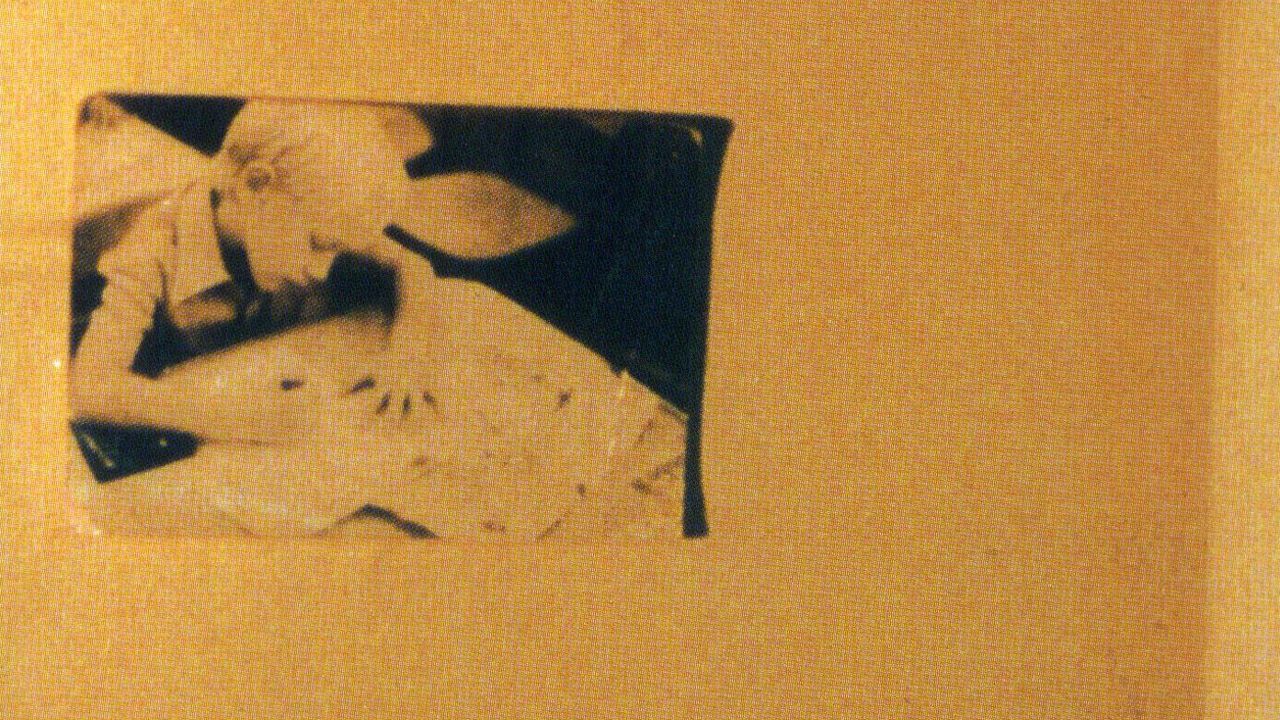
I Could Live in Hope

“You’ve never lived until you’ve walked through a field at high noon with the sun out and not a cloud in the sky and it’s 40 below,” Alan Sparhawk told the Chairs Missing zine in a 1996 interview. “It’s like walking on the moon. The sun is straight up over your head and you can feel like death is right around the corner!” I live in Upstate New York, and as I write this, the weekend forecast is calling for temps well below zero, before taking into account windchill. It’s February, and the piles of icy snow rise above eye level. A good time to put on some Low.

In the earliest days, the fact that the band came from Duluth, Minnesota, a small city at the westernmost tip of Lake Superior, whose name is synonymous with the sensation of cold for anyone who has immersed their body in it, was the third most important thing to know about Low. The second most important thing was that two of its three members were practicing Mormons, which made them outsiders twice over in the underground rock world in which they operated: To be a self-described Christian in this milieu was strange enough, and here they were in a branch of the faith that many Christians weren’t even sure about.

Reader Score

No score yet, be the first to add.

0.0

And the most important thing to know about Low, of course, is that they played slow. Very slow. And quiet, which intensified the effect of the tempo. The word “slowcore” was used to describe a band in 1993, the year Low formed and wrote and recorded the songs that wound up on their debut album, I Could Live in Hope. But it was used in a piece about New York’s Codeine. And while Codeine did indeed play at a measured pace, they were also dynamic, which meant noisy catharsis was a vital part of their aesthetic. Early on, Low didn’t do catharsis. They made you feel something sad or uneasy and then they kept you there for many minutes on end until you weren’t sure what to do with yourself.

Low’s three-decade saga of innocence and despair began in an elementary school in Clearbrook, a tiny farm town surrounded by even smaller farm towns a few hours northwest of Duluth. There, Alan Sparhawk, age 9, enrolled after moving from Utah with his family. He later described his parents as somewhat free-spirited as devout Mormons went; perhaps they carried just a little of the hippie temperament that infiltrated many Christian communities in the 1970s. Mimi Parker, two years older than Sparhawk, was already in attendance. By high school they were dating and then they married in their early twenties. Parker converted to Mormonism, and the ceremony was held at a temple in Provo.

By the time of their wedding, Sparhawk was already a couple of years into trying to make a life in a band. Music had long been an obsession, and he had an unusual attraction to underground music at a time and place when information about it was hard to come by. An image of a punk rocker glimpsed in a magazine triggered months of internal theorizing about what the music these people made might sound like, and he eventually developed a fondness for greyscale, goth-leaning bands like the Cure and Joy Division. He bought a bass, then a guitar, which, around age 19, he started playing in a Duluth band called Zen Identity. They sounded pretty much like you’d expect a rock band from a town with a nearby college radio station to sound at the turn of the ’90s—Sparhawk later described them as an inferior version of early Soundgarden. Incredibly, there’s a decent video on YouTube of them playing a gig in Superior, Wisconsin. In a poetic twist, they were opening for Quiet Riot.

On long drives with nothing to think about Sparhawk liked to kill time by coming up with band names, aiming for monikers that were both original and hinted at a group’s sound such as Rancid or the Jesus Lizard. One day while alone behind the wheel after a band rehearsal, he thought of the name Low, which fit with a concept he’d been ruminating on, of a band that played slow and quiet. After working through some ideas around the concept with Zen Identity’s bassist, John Nichols, he asked Parker if she might join them on drum. That’s right, “drum,” singular. Parker loved music and had drummed in her high school marching band but didn’t think of herself as a performer and only reluctantly agreed. They borrowed a snare, to which she added a ride cymbal, and Parker sang harmonies and then a few leads. They had everything they needed.

Low played a show in September 1993, just a few months after that drive from band practice, and it too is on YouTube, audio only, in shockingly high quality. It’s astonishing how full-formed the band sounds, how the songs that would soon be on I Could Live in Hope are already all the way there. Hearing them played in front of a tiny crowd, it’s impossible not to think of their quietude as a forceful punk rock gesture. The songs unfold with jarring intensity that is stretched out over many minutes—slow, always; dreamy, sometimes; soft, only occasionally.

Seemingly everyone who heard Low in 1993—probably just a few dozen people—was knocked on their ass. They recorded a few of their new songs at home and sent out copies of the demo to four labels. One of these, Dischord, wrote back, describing the tape as beautiful but pointing out that they only worked with bands from the D.C. area. Another, to the producer and engineer Mark Kramer, care of his imprint Shimmy-Disc, changed their lives.

Years later, Kramer described his first encounter with the demo in near-religious terms. “I put the tape into my cassette player around midnight and pulled some headphones over my head, which exploded in slow-motion over the next 30 minutes,” he told The Quietus in a 2019 retrospective piece on I Could Live in Hope. “I was quietly freaking out. I could hardly get to sleep. I had to find this band and bring them into my studio and see if I could create an audio experience that brought the listener to the same emotional place I’d found myself immersed in.”

Low had neglected to include contact information in their package, but Kramer saw the Duluth postmark and called a local radio station, who knew of them and passed along a number. The producer summoned the trio to his studio in New Jersey, just across the Hudson from Manhattan, and Parker borrowed a couple hundred bucks to fund the trip. After they cut a few tracks, Kramer dubbed rough mixes to a cassette and passed it along to Elizabeth Brooks, the head of A&R at Vernon Yard, a new imprint under the Virgin umbrella. She begged him not to tell anyone else about them so she could sign them. After one more trip home and then back to Kramer’s studio, the record was complete and the ink was dry on the Vernon Yard contract. Roughly nine months or so after Sparhawk’s epiphany, I Could Live in Hope was out and Low was real.

Low sent their music to Kramer because they loved his work with Galaxie 500, a band to which they’d often be compared in their early days. The comparisons made sense—two trios, each comprising two men and a woman; languid pacing; grounding in the atmospheric end of UK post-punk. And, of course, generous helpings of Kramer’s trademark reverb. With Galaxie 500, the processing amplified the band’s psychedelic underpinnings and suggested altered consciousness, but with Low it had a different effect. Instead of signaling disorientation, reverb made Low sound like they were playing in a cathedral, suggesting reverence and meditative focus. Galaxie 500 were trippy and occasionally wild; Low were disciplined.

Discipline and focus beget efficiency. “Too many words, too many words” goes a knowing line in the opening “Words,” and Hope is an hour-long broadside railing against prolix tendencies. All song titles use a single word—“Cut,” “Down,” “Drag”—and lyrics for most tracks comprise just a few short sentences. Low’s songs aren’t quite narratives; they seem to catch a glimpse of something happening while the rest of the action unfolds outside the frame. You sense the possible histories that brought you to the song’s moment, and all the places it might go after. The first two lines in “Fear” are Sparhawk and Parker harmonizing, “If you see my daughter/Don’t tell her I’m scared,” and the raw vulnerability of the expression is overwhelming. It’s like a gut-punch haiku or the Hemingway six-word story, a phrase that conveys so much with so little—separation, love, isolation, connection, and terror.

A significant part of Low’s legacy can be traced to Sparhawk and Parker’s voices, the yin and yang of how each sounded on their own and what happened when they came together. His singing is the result of concentration and effort, as if he’s trying to get every syllable right. Occasionally on Hope, Kramer’s production submerges it completely in murky reverb, which suits the album but doesn’t feel quite right for Sparhawk’s persona as a singer. His propensity for clarity can sometimes make Low sound vaguely emo-ish, but his patience and focus emphasize the music’s formal qualities, making you hear his singing more as music rather than simple personal expression.

Parker’s voice on the other hand has the natural lilt of conversation—her tone is sweet, warm, and soulful, a balance of airiness and gravity. On later records, such as the ones Low made with Steve Albini, her singing was captured in a much drier production setting, but it was as if her voice carried its own reverb with it, creating atmosphere out of nothing. When she sings lead on Hope, as she does for the first time on “Slide,” it’s like a secret door opening to a room you didn’t know was there.

The magic of Low was in how their voices came together, braiding into one both tonally and in terms of the music’s broader meaning. Subliminally, their voices projected two complementary ways of seeing the world and then fused in harmony into a third way. The effect is most striking on the brief “Sea,” which sounds like it was chipped off a lost early Fairport Convention record. It’s a blissful sigh of a tune in the middle of Hope that shows up just when you need it badly.

When Low first came on the scene they were difficult to classify—bits and pieces of their music were easy to connect to other bands, but no one sounded like them. As the ’90s wore on, tourmates and label associations pulled them in the direction of ambient-inclined post-rock, and bands like Labradford, Mogwai, and Dirty Three became peers. These elements of Low’s sound were first heard in Sparhawk’s guitar playing, which used swells in volume, minimalist repetition, and dissonance for expressive effects rather than melodic or harmonic development. The chord progression on “Cut” is unusual in that it seems clearly connected to his alt-rock days—imagine it scuffed up and used to build a grunge tune. On the nearly 10-minute “Lullaby,” we get a sense of the furious strumming and wide dynamics that would become more common with Low later.

Given the limitations of her spare setup, Parker’s drum and cymbal play an outsized part in defining Low’s aesthetic. There are countless records where the unhurried tempo is what you notice first—Chet Baker’s 1954 recording of “I Get Along With You Very Well (Except Sometimes)” comes to mind for me—but no one made you feel the slowness like Low did, and Parker’s percussion was a large part of that. At times, you can sense your body wanting beats to come faster, and the music’s confident insistence of its pulse keeps knocking you back. The pace becomes a force in and of itself.

This would be Nichols’ only album with Low—disagreements over the band’s rigorous tour schedule led to his departure and the addition of long-time bassist Zak Sally. Though his time with the band was short, Nichols’ role on Hope is significant. Low’s sound is grounded in music where the basslines matter, and the music is so skeletal the instrument has to carry its weight. Nichols’ melodic approach draws heavily from Joy Division’s Peter Hook and the Cure’s Simon Gallup, but the record’s cavernous production lends a ghostly dubbiness that hints at danger. Almost every track has a bassline that sticks in your mind from the first play.

Hear it on the quietly harrowing “Rope,” where Nichols moves back and forth between ominous low end and tapped harmonics while Parker plays along with an almost metal-like intensity. The song’s title is its most important word but, model of efficiency, the song itself never uses it. “You’re gonna need more,” Sparhawk sings, and we only know what he means at the very end, when he speaks the line, “Don’t ask me to kick any chairs out from under you.” The fragment on suicide is counterbalanced by the closing recitation of the country standard “You Are My Sunshine” (retitled “Sunshine”), which has been sung by many a weary parent over their baby’s crib.

Low made a video for “Words.” For most of the clip, we see each player with their instrument in a dark room, so young, separate but together, and the video is bookended by grainy 16mm footage of the trio dragging a boat along the shore of Lake Superior in the dead of winter. The camera kept freezing, and they had to return to the car repeatedly to warm it up. I Could Live in Hope came out in February, and for such a small release from an unusual band, it got around. Nearly every review mentioned how slow and depressing the whole thing was, and almost all of them praised it despite these qualities. The band quickly got used to talking about the “Why?” of their music in every interview.

“The degree of slowness is directly proportional to the intensity of memory,” Milan Kundera wrote in his 1995 novel, Slowness. “The degree of speed is directly proportional to the intensity of forgetting.” The author writes of slowing down when walking if you are trying to remember something, and speeding up when departing an unpleasant encounter, as if to leave it behind forever.

As time went on, Sparhawk and Parker let more into Low and the band’s sound expanded and widened until, on their two final records, 2018’s Double Negative and 2021’s HEY WHAT, it shattered in glorious fashion. Parker’s death from cancer in 2022 can make that later work hard to hear. It helps to first return to the beginning, when Low’s music was something precious and theirs alone, an infant idea that needed protection.

Additional research by Deirdre McCabe Nolan.