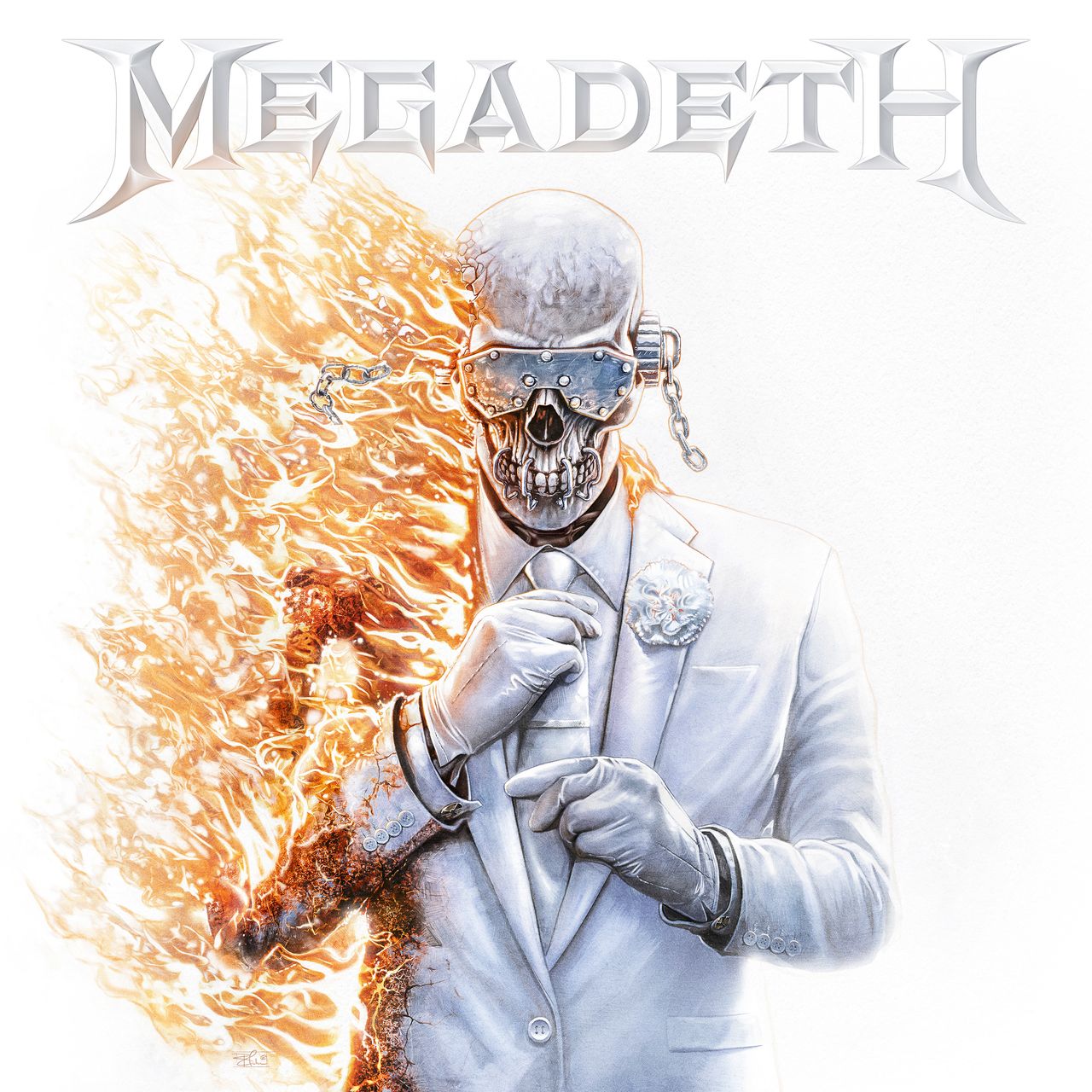
It’s been 43 years, 17 albums, and 32 member changes since Dave Mustaine was kicked out of Metallica, the fabled schism that galvanized the thrash-metal pioneer to form his own band. Megadeth was fueled by spite, inspired by speed, and enabled by Mustaine’s preternatural gift for Flying V warfare, as well as his knack for asking provocative economic queries about the salability of peace. For four decades, Megadeth have been high priests—not the highest, but close—in a church of metal where technical prowess, breakneck tempos, and sneering attitude are the holiest of virtues. Megadeth have weathered nearly all of metal’s generational permutations, only once deviating from their heshin’ formula with 1999’s infamously confused country’n’industrial mish-mash, Risk.
Like most ’80s metal heroes who briefly lost their way in the late ’90s, Megadeth have spent the 21st century varnishing their legacy with what’s tried and true, delivering eight LPs since 2001 that all basically sound the same. And now, not by choice, but by necessity, Megadeth are exiting the business with their self-titled swan song. Mustaine, the band’s leading visionary and only original member, is suffering from a hand injury called Dupuytren’s contracture that will eventually claim his singular ability, so Megadeth might be the last album the guitar god is ever capable of making. For a career that can be symbolized by Mustaine’s fascination with ellipses, both textual (So Far, So Good…So What!) and musical (those guitar solos…), it’s too bad that his final statement amounts to the terse utility of a single period.
No score yet, be the first to add.
If you’re going into the 17th Megadeth album expecting fresh perspectives and guitarwork that goes toe-to-toe with the brilliantly imaginative riffs that Mustaine laid down half a lifetime ago, that’s a skill issue. Bands in Megadeth’s grandad age bracket—Iron Maiden, Judas Priest, even Metallica—make new albums for the same reason that people re-register their cars: to prove they’re still functionally fit for the road. Opener “Tipping Point” earns the green light in that regard, a brisk and bludgeoning thrash jaunt that begins with a torrential solo raining down from Mustaine’s fretboard. The 64 year old vamps for the doubters once again on “Let There Be Shred,” a lighthearted blitz that revisits the meta posturing and tongue-in-cheek silliness of thrash’s foundational texts. And on the midtempo “Puppet Parade,” Mustaine dons his grizzled spoken-word cadence in a pointed nod to all-timers like “Peace Sells” and “Symphony of Destruction.”
Megadeth proves that Megadeth can still do the thing, but it’s missing the communal gravitas of a band’s last hurrah. Megadeth have endured more personnel changes than any other thrash institution, and while Mustaine has firmly maintained the spotlight, the band’s greatest feats have always been a team effort. He’s never had a lineup as creatively inspired as the early-’90s ensemble responsible for the nimble riffs, jaw-dropping solos, and slugging prog-jazz grooves of Rust in Peace and Countdown to Extinction, which is why nothing on Megadeth comes anywhere close to those highs. His current hired guns get the job done, but without decades of camaraderie behind them, their recorded chemistry sounds bland and inflexible. Plus, it’s a little disappointing that Megadeth’s tastiest solos are handled by Temu Dave Mustaine, a guitarist literally named Teemu Mäntysaari who’s never appeared on a Megadeth record before this one.