Light-Years

Even when he was too young to have one, Nas was fixated on the past. His breakout moment, the starmaking first verse from Main Source’s 1991 posse cut, “Live at the Barbeque,” cast him as the perpetual Old Soul, flaunting his years-long street bona fides from the wizened perch of 17. Nas dropped Illmatic, his unimpeachable opening salvo, when he was only 20, taking a haunted stroll through his Queensbridge adolescence on “Memory Lane (Sittin’ in da Park).” An undercurrent of nostalgia weaves throughout his 30-year discography. You hear it as he wistfully thumbs through pages of forgotten verses on “Book of Rhymes,” from 2002’s God’s Son, or 10 years later in the high-octane recollections of Life Is Good highlight “A Queens Story.” Throughout both the King’s Disease and Magic series, Nas and Hit-Boy’s six-album run from 2020 to 2023, he uses memories as myth-making tools, sitting atop them like a victorious monarch surveying his spoils.

Nas has indeed lived many lives. He’s been a semi-serious graffiti writer, a scrappy young MC with an immediate classic, a mainstream darling trying to live up to that classic, an improbable pop sensation, a cult movie star, an allegedly abusive husband, a venture capitalist, a restaurateur, and a wealth manager’s dream. And throughout it all, he’s continued to rap, maintaining the kind of prolific output that prolonged stardom and its webbing of diversified portfolios rarely afford. One’s mileage may vary with individual records, but he’s high up on a very short list of the best rappers ever, and Illmatic is still widely recognized as the greatest rap album of all time, even recently voted as such by this very publication’s readers.

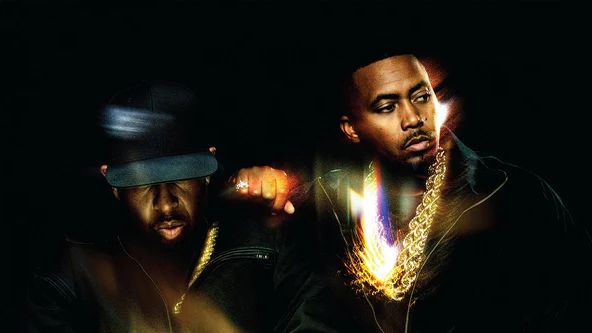
Many of Nas’ best songs are collaborations with DJ Premier, the equally legendary producer. His work in the ’90s and early ’00s, both as half of Gang Starr and as a free agent, helped define and subsequently update the golden-age East Coast boom-bap sound. Primo left the seams showing on his best beats, deftly combining chunky sample chops and simple, swinging, heavy-bag drums into herky-jerky, screw-face symphonies. His scratched hooks were iconic, and each line he collaged into a chorus became canon. Though Gang Starr was Primo’s primary artistic partnership for nearly two decades, it was easy to imagine that he and Nas could form the same symbiotic chemistry he shared with Guru if they combined forces for a full-length. Imagine an album full of “I Gave You Power” and “Nas Is Like” jams, fans thought. The two appeared together on the January 2006 cover of Scratch Magazine, and wishcasting kicked into high gear. Over the years, they’d make occasional nebulous allusions to a forthcoming duo record that never appeared, and it became one of the reigning what-ifs in hip-hop history.

When Mass Appeal announced that its Legend Has It series would conclude with Light-Years, the long-anticipated Nas and DJ Premier album, rap nerds (read: elder millennials and Gen Xers) reacted with a mixture of apprehension and delight. On the one hand, it’s a Nas and DJ Premier album, the white whale for dudes who used to rock brimmed beanies and argue on the Okayplayer boards. On the other hand, it’s a Nas and DJ Premier album in the mid 2020s, a decade in which neither artist has made anything truly great. Sure, Magic 3 is a legitimately good Nas album, but he and Hit-Boy had to wobble through five previous albums to get there. Primo had a busy 2025, producing a couple of LPs for Roc Marciano and Ransom, but they were ultimately forgettable, filled with sleepy, half-hearted versions of his tried-and-true formula.

Light-Years falls somewhere in the middle: decent enough—and certainly the strongest project Nas has released in his current era—yet seldom amounting to more than nostalgia bait for the 40-plus contingent. It’s meant to be a celebration of these two rap titans’ respective careers, a goal the album modestly achieves, but it spends so much time dwelling on the past that it’s hard to know precisely what Nas and Primo wanted from the experience. Nas, now 52, rifles through his memory banks as always, but he doesn’t come up with any new wisdom this time around. Premier’s beats are big and expensively engineered, but they tread lightly, as though he made them while sitting in a comfy chair, concerned that too much knock might tweak his back. It’s safe and easy to listen to, a backward-looking album that simply looks backward, giving the impression of a mood board reading, “Wow, a lot of time has passed.”

Take “NY State of Mind Pt. 3,” which Premier builds around a sample from the Billy Joel anthem of the same name, a too-obvious choice. Nas leaves behind the granular details of desperate gunfights and dwindling friend groups that made the other installments so potent and profound, instead coming off as a dad describing the old stomping grounds to his bored children: These neighborhoods have gentrified, and dang, the businesses that used to be here have closed. New York—the city, the idea, the sound—has changed significantly, and perhaps Nas isn’t quite sure where he fits in it anymore. “I miss ’87,” he raps with a slight note of resentment, adding, “In Queens, was a teen then, a kid with a chain/Holding a pen and wrote pain/We’ll never see this again.” That small but revealing moment essentially becomes the album’s thesis.

The examination of the past all feels pretty surface-level. “It’s Time,” another on-the-nose sample flip (Steve Miller Band’s “Fly Like an Eagle”), has Nas presenting the “grown, over-50 perspective” that basically amounts to “life can be short.” The beat for “Pause Tapes” has a rudimentary arrangement that adequately recreates the crude construction of pause-tape production, but it scans as unfinished and quickly wears out its welcome. Nas describes the wide-eyed wonder of discovering music as a kid and how it led him to write his first verse. It’s a vivid portrait, but it has the familiar feeling of a story told at every family gathering. AZ shows up as the album’s lone feature on “My Story Your Story,” and though it’s great to hear the two rappers once again twist around each other like briar branches, it’s tough to parse what the song is actually about. Nas opens by using “fuck” the way Kurupt used “bitch” in “Xxplosive,” and the intricately empty verses are bookended by Nas and AZ talking about how many tracks they’ve cut together, more high-school reunion than victory lap.

When Nas does engage with the present, as on “GiT Ready” or the last verse of “Nasty Esco Nasir,” he’s mostly trying to sell us something. In the former, he plugs Ethereum and calls himself “Mr. Cryptocurrency Scarface,” stubbornly insisting on the nickname he gave himself on DJ Khaled’s “Sorry Not Sorry.” Nas is no stranger to flex raps, but his blockchain bars have the hollow ring of a timeshare sales pitch. On “Nasty Esco Nasir,” he calls himself a “tech impresario” and a “mogul,” offering quality care assurances about the cigars his company makes. He’s also “a father, philanthropist, film director, [and] an author,” but those all take a backseat to his exciting new role as “Resorts World casino partner.”

There are a few genuinely scintillating moments on Light-Years, though. “Shine Together” is an inspired mid-tempo cruiser in which Premier and Nas hit their every strength. It’s an interesting version of what the producer does best: sourcing a shimmying loop, creating tension with syncopated kicks at the end of each measure, releasing the tension with a sharp snare, and resolving a chord with an adroitly chopped bassline. Nas sounds hungry again, his dense, circular writing a tangle of flashbacks and evocative images of preachers rebuking demons and Yoda smoking blunts. Primo’s beat on “Madman” takes us back to a crisp mid-’90s BPM, its loping pattern, hair-raising strings, and funky bassline a reminder of how many of today’s producers have studied his blueprint. The best song is “Writers,” a colorful ode to graffiti writers set to a classic B-boy workout, all shuffling drums and liquid bass licks. It’s one of the few moments when Nas digs a little deeper to highlight a vital part of hip-hop culture that’s fallen from the spotlight, fully earning the nostalgic sheen that coats most of the album. In these flashes, it’s clear that the two are at least occasionally capable of making something worth the 20-year wait.