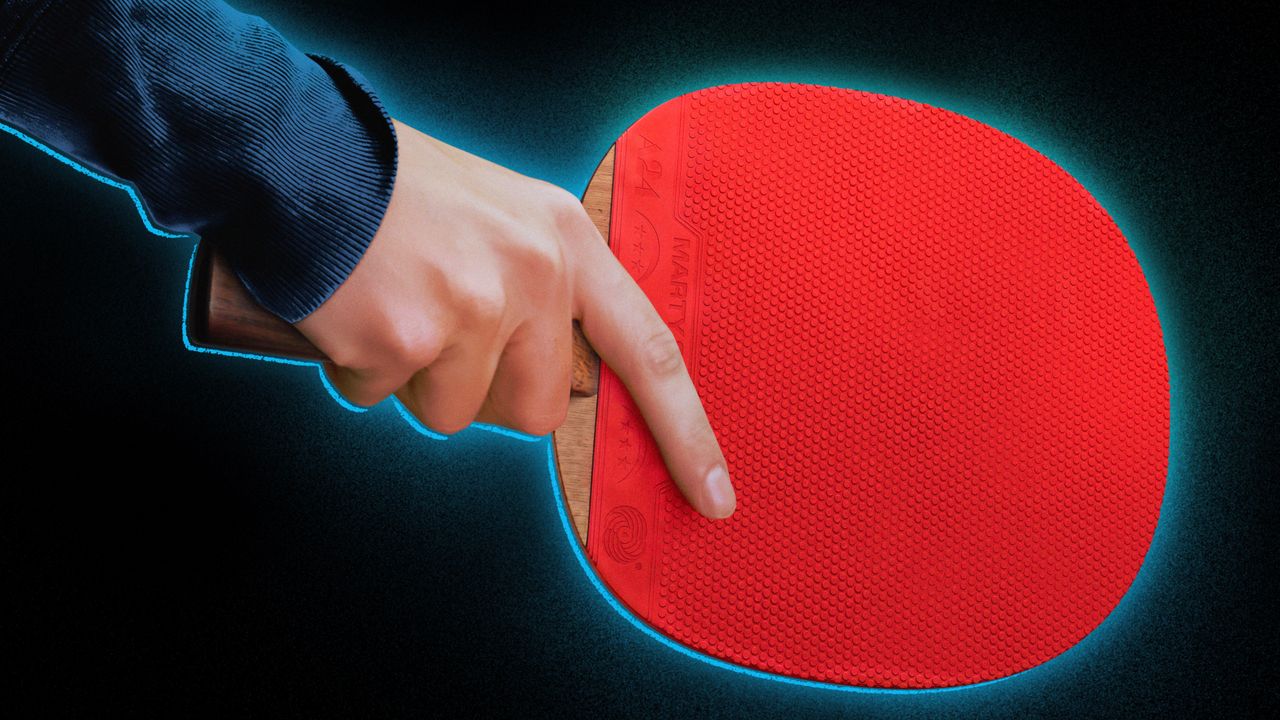
Marty Supreme (Original Soundtrack)

Daniel Lopatin doesn’t score the Safdie brothers’ movies so much as open portals in them. In Good Time and Uncut Gems, his worship of all things kosmische created a peculiar contrast with the images on screen, drenching the brothers’ grainy tales of ’10s debauchery in the aura of an earlier time. Hospital hallways gleam with the same twilit aura of Thief; New York’s diamond district ripples with as much danger as the landscapes of Sorcerer. Lopatin isn’t recreating Blade Runner with his soundtracks as much as Risky Business, pulling us into the subconscious of the Safdies’ manic characters and submerging us in their doomed self-sabotage. When Howard Ratner hits, we don’t just resolve to a major chord—we enter the realm of the angels, with glowy flutes and Mellotrons dancing in the air like a thousand roses blooming at once.

It’s all very heightened, absurd even. But with his score for Josh Safdie’s whirlwind new Timothée Chalamet vehicle Marty Supreme, Lopatin has taken this woozy, internalizing effect and sent it outward. Safdie’s latest follows a hungry young Jewish table tennis player in the early ’50s on his mission to bring glory to himself, his game, and all of America while he’s at it. As Chalamet hurtles toward his supposed destiny, a parade of ’80s hits lights the way, pointing toward some imagined time as futuristic for him as it is nostalgic for us. Tears for Fears’ “Change” launches the film like it’s shooting Marty out of a cannon. Songs by Peter Gabriel and New Order swirl as if we were caught in an endless training montage. I won’t spoil how Alphaville’s “Forever Young” gets used, but it underscores a particularly seminal moment for our hero.

The music in Marty Supreme is a central character, one as freewheeling, in-your-face, and impossible to resist as Marty himself. Though the ’80s and its attendant commercialism and sci-fi cheese have always been of particular fascination to Lopatin, his previous Froese-flavored scores only reflected the surface shades of his craft. Where his work as Oneohtrix Point Never has blurred boundaries, his scores have often leaned more toward pastiche. But for Marty Supreme, Lopatin meets the larger-than-life film on its level, building the palette he’s honed over the years into a totalizing prism of sound.

Lopatin delves into his longtime concerns over media and memory by constructing a lush, time-drunk soundscape that echoes the chintzy Fairlights, DX7s, and Synclaviers of the film’s pop songs. The arpeggio is once again the grounding current, and he draws on everything he’s learned to do with it since his Rifts days. New-agey R Plus Seven flutes chirp through the iridescent romance of “The Call” and “The Apple,” before “Endo’s Game” brings Marty’s high plummeting down with the dark, throbbing bass of Garden of Delete. “Holocaust Honey” reinterprets Constance Demby’s “Novus Pt. 2: The Flying Bach” as a circus of spiralling organs, strings, and choirs, blowing up one the film’s most dreamily haunting flashbacks to Koyaanisqatsi proportions. If Lopatin has increasingly pushed his solo music into a more over-the-top, dramatized mode over the years (with the refreshing exception of this year’s mellow Tranquilizer), all that theatricality finally finds a good outlet here, lifting the material to grandiose and otherworldly places.

As the story of Marty Supreme traverses nations, Lopatin’s score follows suit. With Japan standing in the way of Marty’s quest to assert American dominance in table tennis, Lopatin weaves in motifs reminiscent of the country’s own colorful history of electronic music. The pompous bouncing-ball stomp of “Marty’s Dream” and “Pure Joy” recall Yasuaki Shimizu’s classic Music for Commercials, while the fluttering, Midori Takada-like marimbas of “Motherstone” come topped with sax and fretless bass straight off an old Prism record. Those mallet instruments continually reappear throughout the soundtrack, providing a ricochet that carries the film through its many white-knuckling escalations (in a Q&A for the film, Lopatin spoke of drawing specific inspiration upon realizing the instrument also consists of a ball and a stick—just like table tennis).

Though the music is obviously at its most powerful when experienced in the film, all of this frantic energy makes for a surprisingly rich record on its own merits. Dispensing with the snippets of dialogue and long stretches of quiet underscore typical of these kinds of releases, Lopatin cruises on a relentless pulse that evokes the movie’s sustained state of tongue-in-cheek nerviness. Swaying between hypnotic, almost parodic instrumentals like the swooning organs of “Vampire’s Castle” and head-in-the-clouds fusion zoners like “Rockwell Ink” and “The Necklace,” the pace and sequencing are as satisfying as any great recent electronic album you could point to. When “The Real Game” peaks with marimbas popping off like balloons, it’s as climactic a moment on the soundtrack as it is in the film.

Lopatin has long sought to mutate popular culture into alien forms. Here, he’s done it with the sports drama, tearing apart its tropes and rebuilding them as a psychedelic voyage into one man’s search for greatness. The film is cosmic Rocky, a thriller-comedy-blockbuster whose scope reaches all the way from the atom bomb to the holocaust and back to the pyramids, locating that beautiful and terrible human need to strive for the impossible, no matter the toll. Lopatin’s music is key to Marty Supreme’s emotions, and particularly its ending—his gorgeous “Force of Life” complicates the film’s commentary on ambition, evoking how limitless and meaningless our dreams can be. It’s all a big swing, and it’s all a big hit.